Breakup 73 seconds after launch
The overnight frost had stiffened a rubber O-ring at one of the joints of the right solid rocket booster (SRB). The ring lost its resilience at launch and failed to seal — hot combustion gases began escaping through the joint.
The flame leak from the booster gradually burned through the strut attaching the SRB to the external tank and damaged the tank itself. At T+73 seconds, at an altitude of barely 14 kilometres (46,000 feet), leaking hydrogen and oxygen from the ruptured tank ignited and aerodynamic forces tore the stack apart. Mission Control was informed of the disaster with the terse line "Obviously a major malfunction."
The crew cabin survived the initial breakup intact and continued on a ballistic arc to roughly 20 kilometres altitude before falling toward the Atlantic. A later investigation found evidence that at least some crew members remained conscious after the breakup — emergency oxygen packs had been manually activated — but the definitive cause of death was the cabin's impact with the ocean surface about two and a half minutes later. No one on board survived the impact.
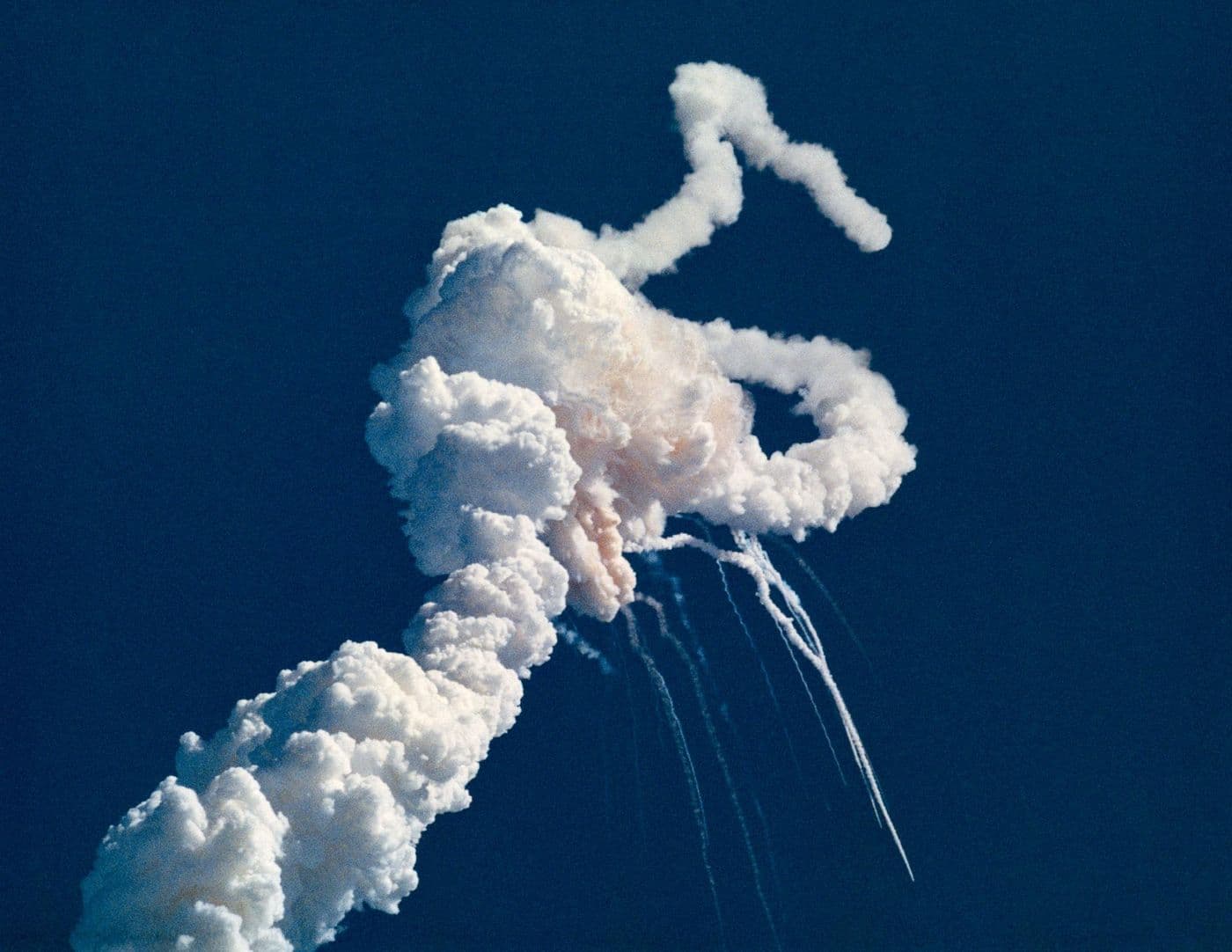 ◉ REÁLNÉ FOTOKouřová stopa po roztržení Challengeru, T+73 sekund.