Launch after the Apollo 1 fire
Apollo 7 lifted off on 11 October 1968 at 15:02:45 UTC from Pad 34 at Cape Kennedy — the first crewed Apollo flight after the Apollo 1 fire that killed Gus Grissom’s entire crew on 27 January 1967.
The ship carried the redesigned CSM-101, the first Block II command module built for lunar-module flights (though Apollo 7 carried none) — more than 1,800 changes were recommended after the fire, and over 1,300 were implemented for Apollo 7. Most visible was the new aluminium-and-fibreglass hatch, which opened outward and could be opened by the crew from inside in seven seconds, or by the pad crew from outside in ten.
Because of strong winds that could have carried the ship over land instead of water during an abort, Commander Schirra wanted the launch scrubbed — NASA management waived the rule and Schirra yielded under pressure. The launch itself went flawlessly; the Saturn IB, flying with a crew for only the fifth time, performed without a hitch. As pad leader Guenter Wendt left the area, Cunningham remarked over the intercom “I think Guenter’s going,” and Eisele replied, “Yes, I think Guenter went.”
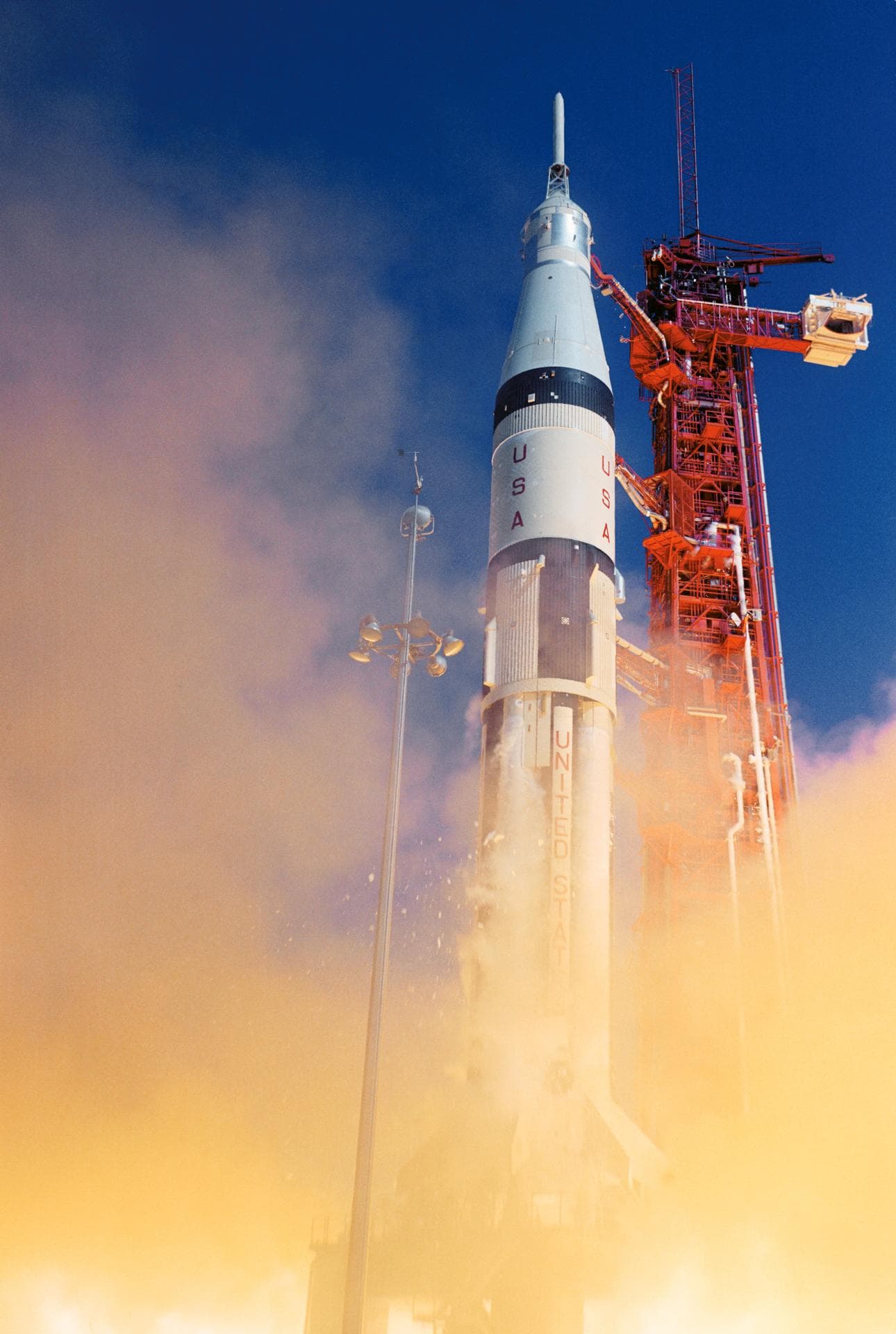 ◉ REÁLNÉ FOTOStart Saturnu IB s Apollem 7 — 11. 10. 1968, rampa 34.
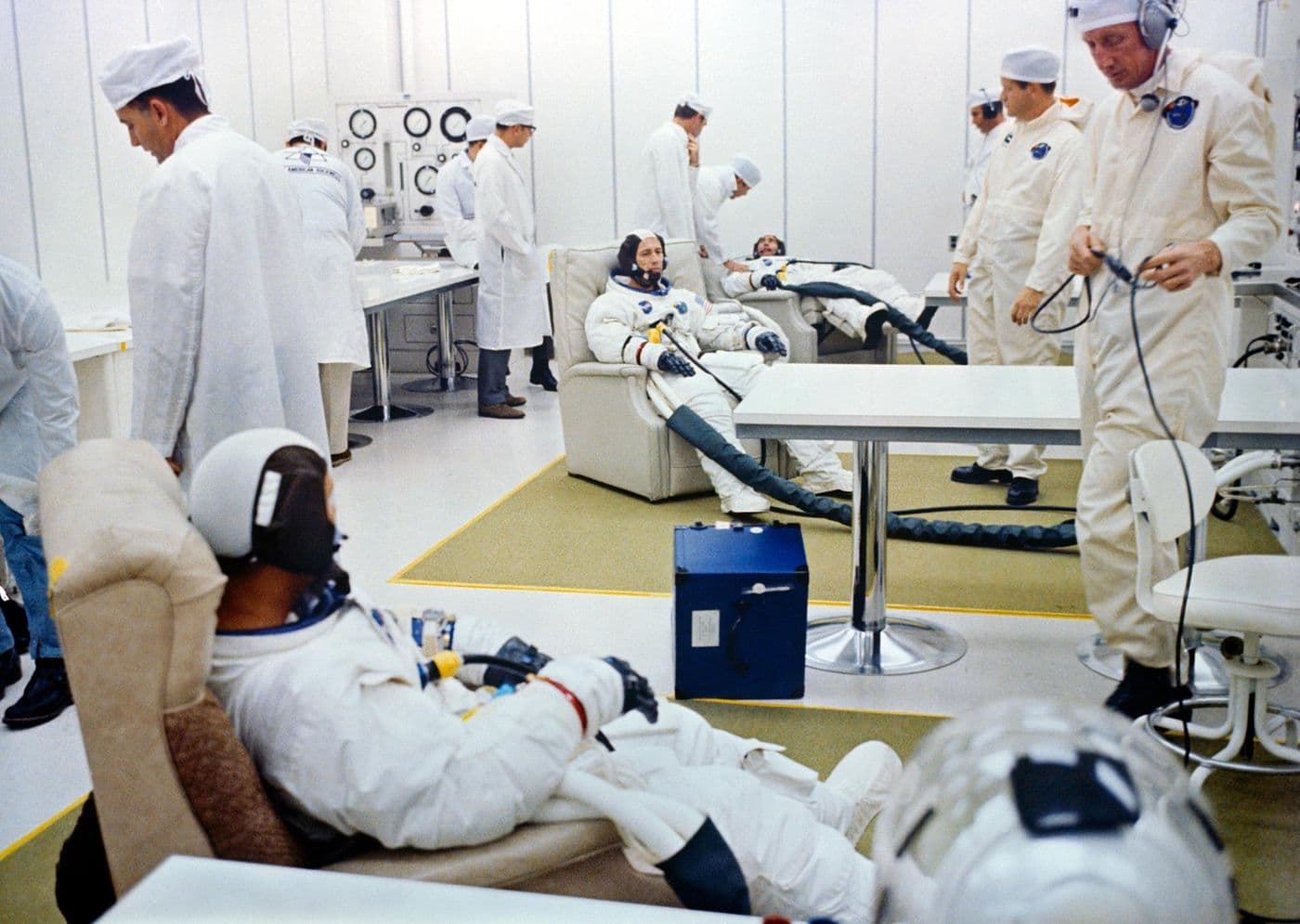 ◉ REÁLNÉ FOTOPosádka se obléká do skafandrů před startem.