Apollo 7
Apollo 7, in October 1968, was the first crewed flight of the Apollo program. Schirra, Eisele and Cunningham tested the command and service module in Earth orbit and broadcast the first live television from a US spacecraft.
 ◉ REÁLNÉ FOTO · NASA / images.nasa.gov
Contents
living encyclopedia entrypollo 7 returned NASA to crewed spaceflight after the Apollo 1 fire that had killed three astronauts a year and a half earlier. The eleven-day Earth-orbit flight thoroughly tested the command module and opened the road to the Moon.
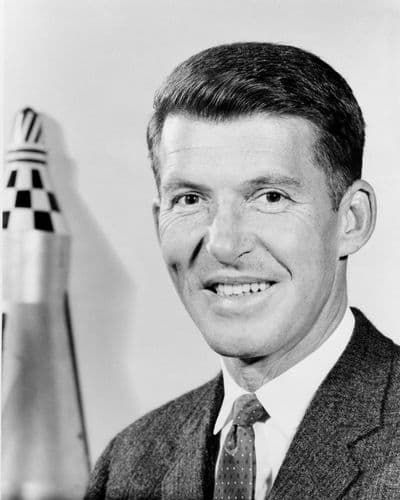
A veteran of Mercury-Atlas 8 (1962) and Gemini 6A (1965, the first rendezvous in space) — the only person to fly in the Mercury, Gemini and Apollo programs. At 45 he was, at launch, the oldest person to have flown in space. He announced before the flight that he would leave NASA and the Navy afterward.
open person →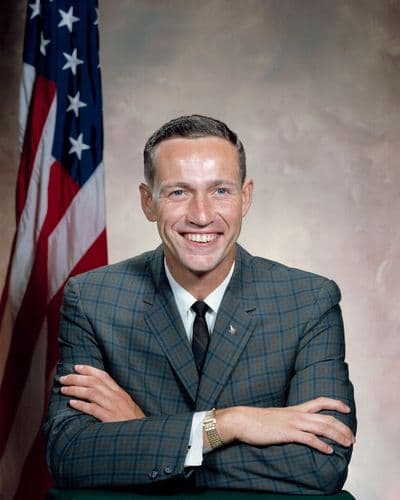
A Naval Academy graduate who served in the Air Force. He was originally slated to fly on Apollo 1, but a shoulder injury led to his replacement by Roger Chaffee shortly before the crew was announced — Chaffee died months later with the rest of the Apollo 1 crew in the pad fire.
open person →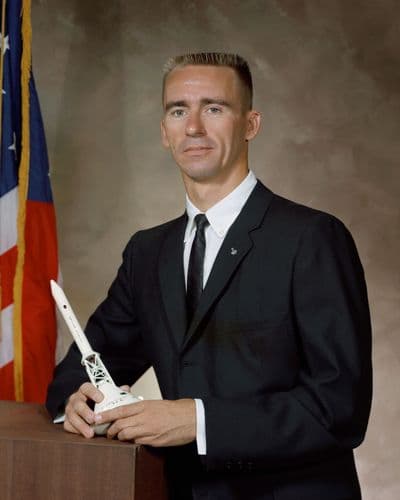
A civilian physicist (UCLA) serving in the Marine Corps Reserve. He carried the title “lunar module pilot” only by the standard crew-position naming — Apollo 7 flew no lunar module. He operated the onboard TV camera during the first live broadcast from an American spacecraft.
open person →Commander Wally Schirra, nursing a head cold and short-tempered, became known for on-orbit arguments with Mission Control over the schedule and broadcasts. Even so the mission met every goal — the service module engine fired flawlessly eight times, and the live “Wally, Walt and Donn Show” won an Emmy.
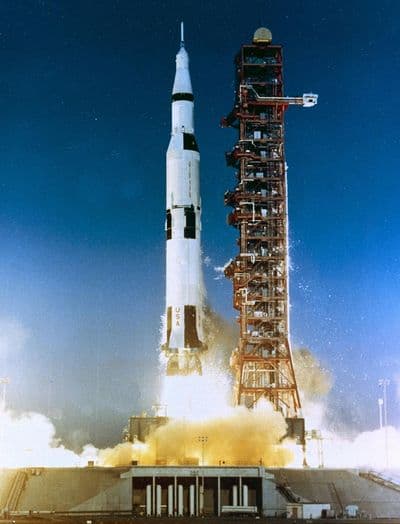
Apollo 7 lifted off on 11 October 1968 at 15:02:45 UTC from Pad 34 at Cape Kennedy — the first crewed Apollo flight after the…
číst kapitolu →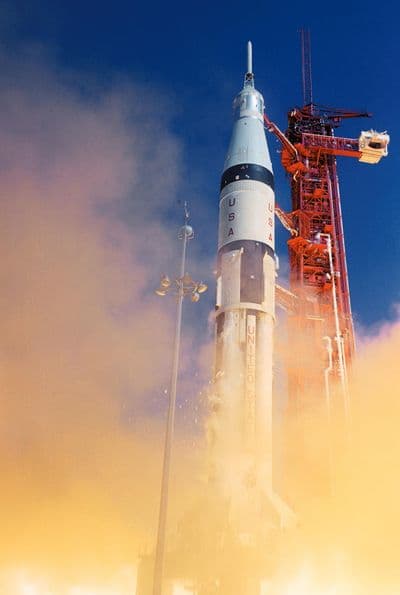
The open-ended, incrementally extended mission was meant to prove the redesigned CSM would hold up and function throughout a full…
číst kapitolu →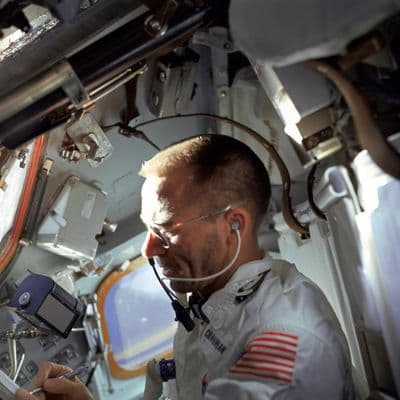
Because of his lingering cold, Schirra insisted the crew go through reentry without helmets — he wanted to be able to equalise…
číst kapitolu →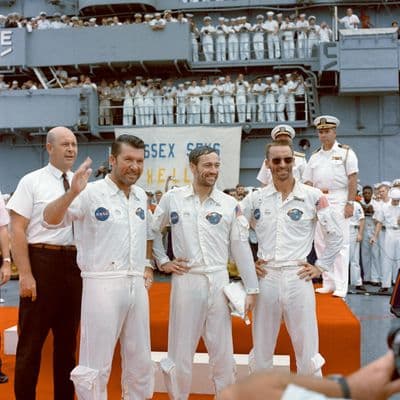
MISSION IN NUMBERS
- It was the first crewed Apollo flight after the Apollo 1 fire, which killed Gus Grissom’s entire crew on 27 January 1967.
- Apollo 7 broadcast the first live television transmission from an American spacecraft — NASA later received a special Emmy for the telecasts.
- Wally Schirra was the only person to fly in the Mercury, Gemini and Apollo programs, and at 45 was, at launch, the oldest person to have flown in space.
- Because of a cold, the crew went through reentry without helmets — a decision Commander Schirra pushed through despite Mission Control’s objections.
- Despite a technically flawless mission, none of the three astronauts ever flew in space again — friction with Houston affected their later careers.
- The mission was so successful that two months later NASA sent Apollo 8 straight into orbit around the Moon.