Birth of an International Project
In 1984, US President Ronald Reagan announced the construction of America's own space station, Freedom. After the end of the Cold War, however, the separate American, European, Japanese and planned Russian projects merged into a single programme — the International Space Station.
The key step was bringing Russia on board: its experience with the Salyut and Mir stations and its existing hardware (a functional module similar to Zarya) made construction significantly cheaper and faster, while the United States gained a political interest in keeping Russian rocket engineers in a civilian programme after the collapse of the USSR. In 1998, fifteen countries signed the agreement on joint construction.
The programme thus merged four previously separate plans — the American Freedom, the Russian Mir-2, the European Columbus module and the Japanese Kibo — into a single station, which is still operated today by five agencies: NASA, Roscosmos, ESA, JAXA and CSA.
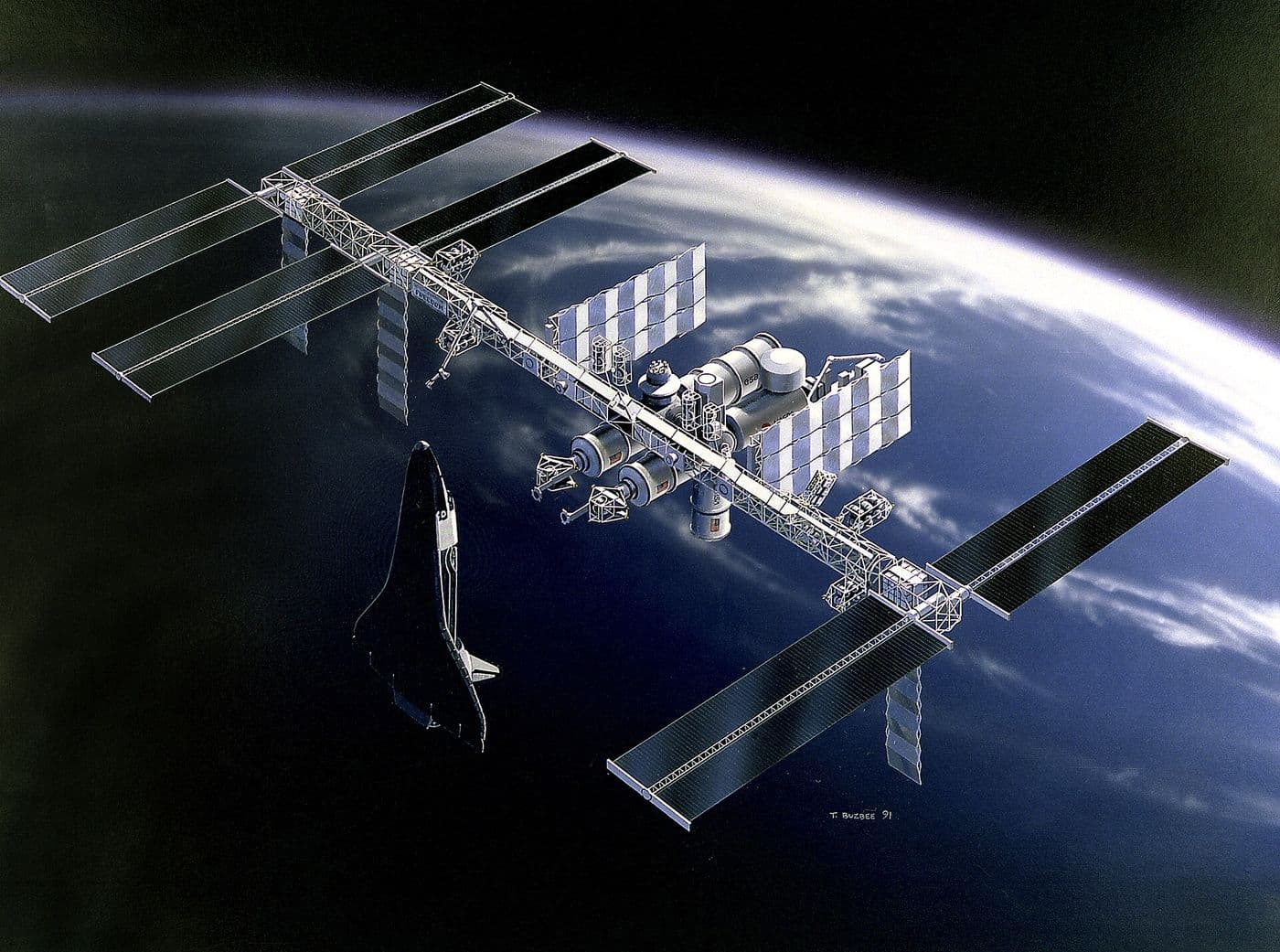 ◉ REÁLNÉ FOTONávrh stanice Freedom (1991) — americký předchůdce ISS.