A helmetless reentry and the end of three careers
Because of his lingering cold, Schirra insisted the crew go through reentry without helmets — he wanted to be able to equalise ear pressure by pinching his nose, which the helmet would have prevented. As commander he pushed the decision through despite Mission Control’s objections.
Apollo 7 splashed down in the Atlantic on 22 October 1968 at 11:11:48 UTC, about 370 km south-southwest of Bermuda and less than 13 km from the carrier USS Essex — without a single malfunction. The mission lasted 10 days, 20 hours, 9 minutes and 3 seconds. Apollo Program Manager Sam Phillips later called it “a perfect mission” that met “101 percent of our objectives.”
Technically the mission was flawless and cleared the way for a bold decision — two months later NASA sent Apollo 8 straight to the Moon. But the friction between the crew and Houston had consequences: none of the three men ever flew in space again. Schirra had already announced before launch that he would leave NASA after the flight; for Eisele and Cunningham, their conduct during the mission was widely seen as the reason later flights never came.
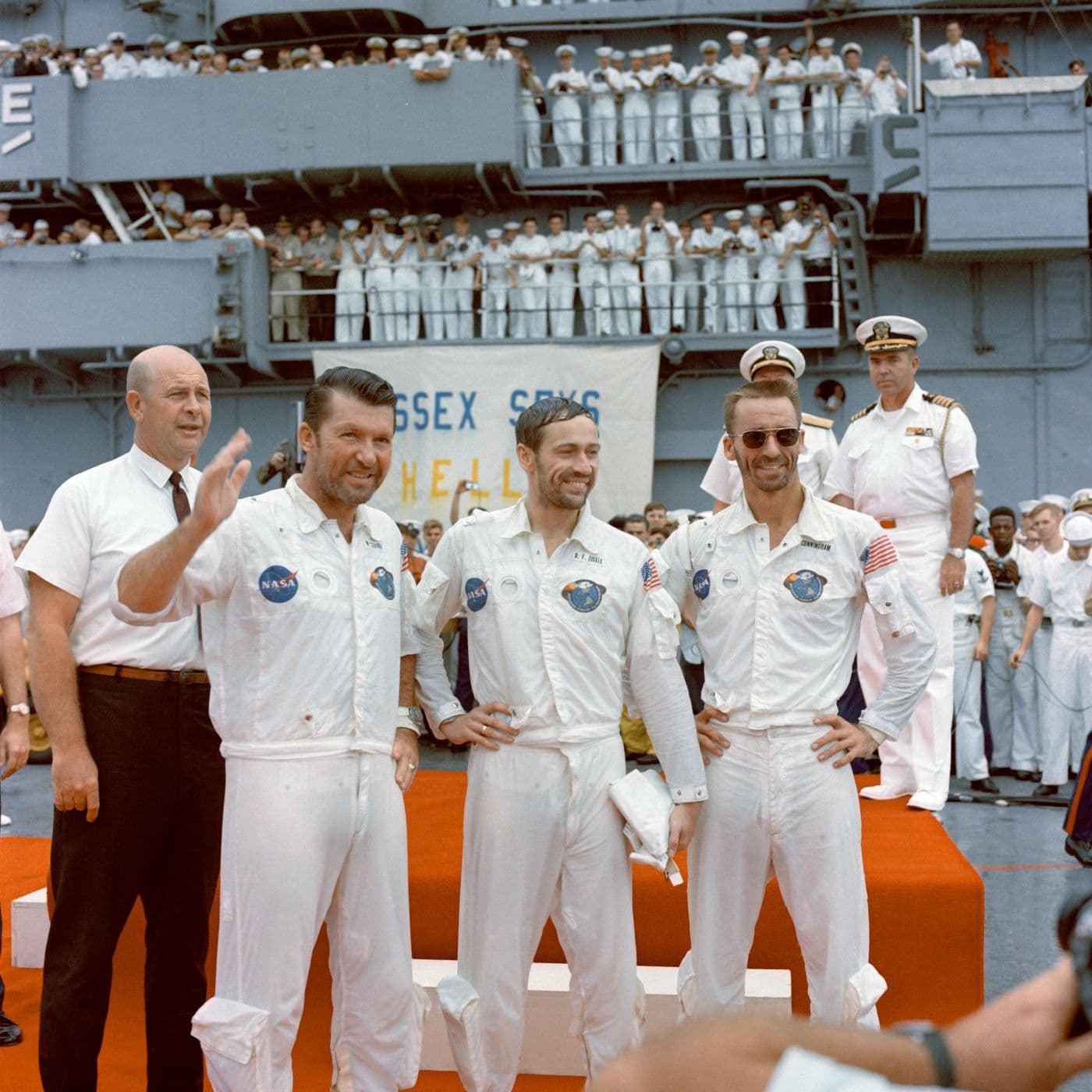 ◉ REÁLNÉ FOTOPosádka Apolla 7 na palubě USS Essex po přistání.
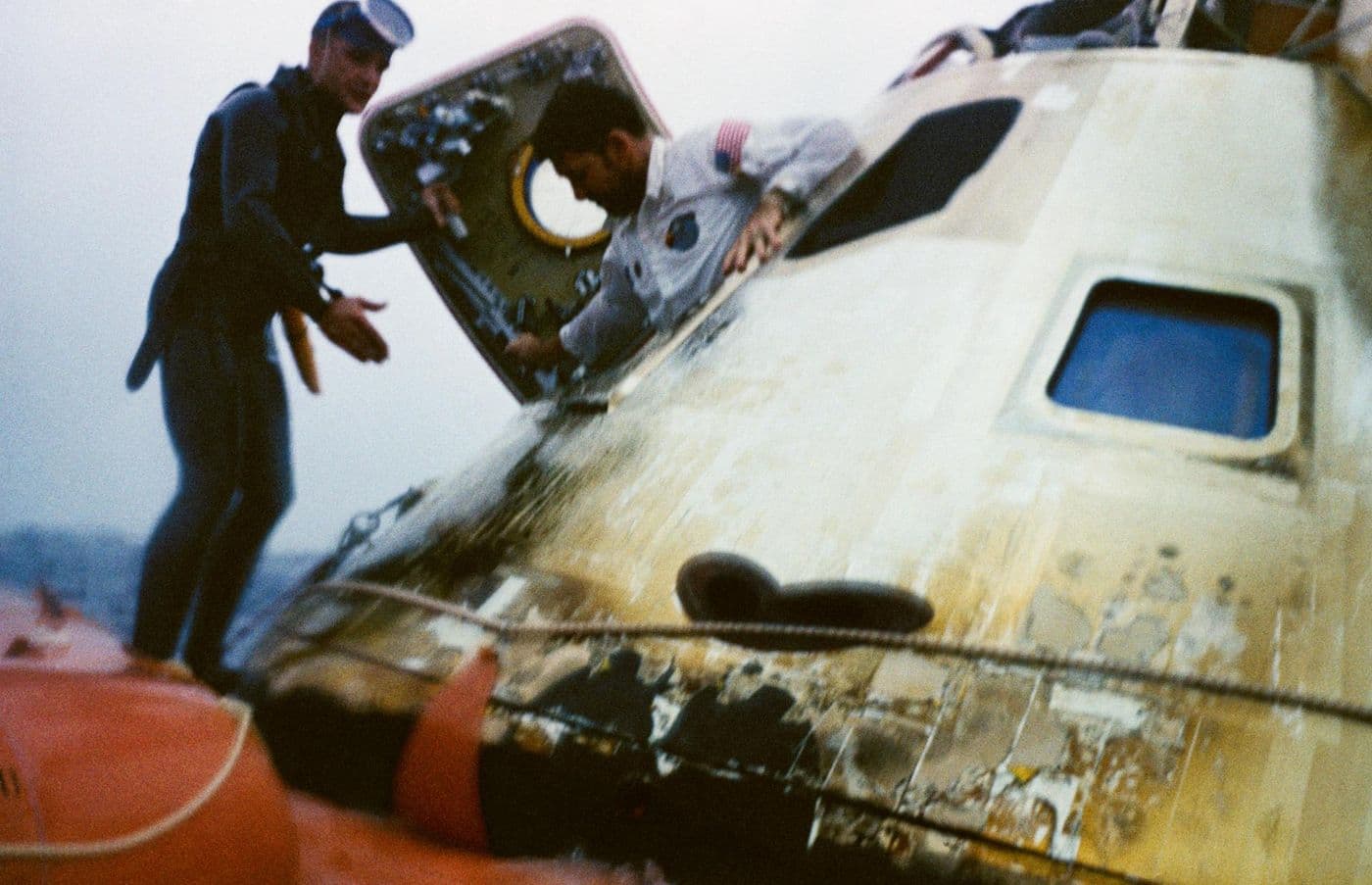 ◉ REÁLNÉ FOTOWalter Schirra vystupuje z lodi po přistání.