Apollo 9
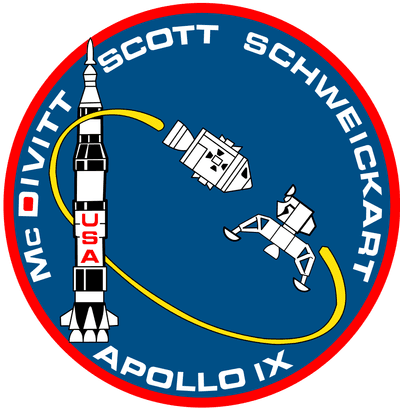
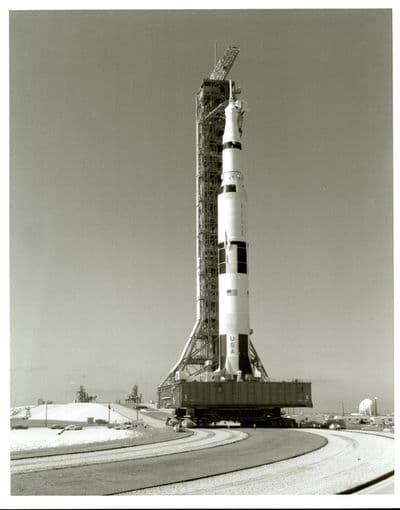
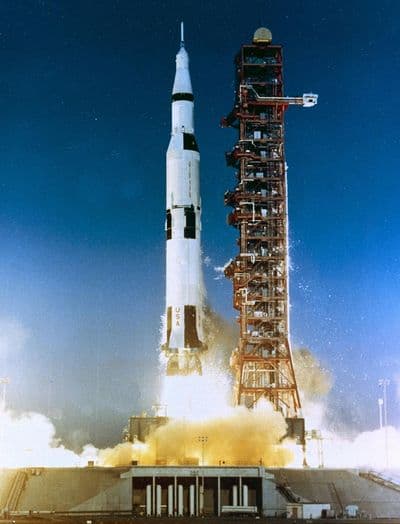
Apollo 9, in March 1969, was the first crewed test of the lunar module — safely in Earth orbit. McDivitt, Scott and Schweickart rehearsed the rendezvous and docking of the two craft, essential for the later Moon landing.
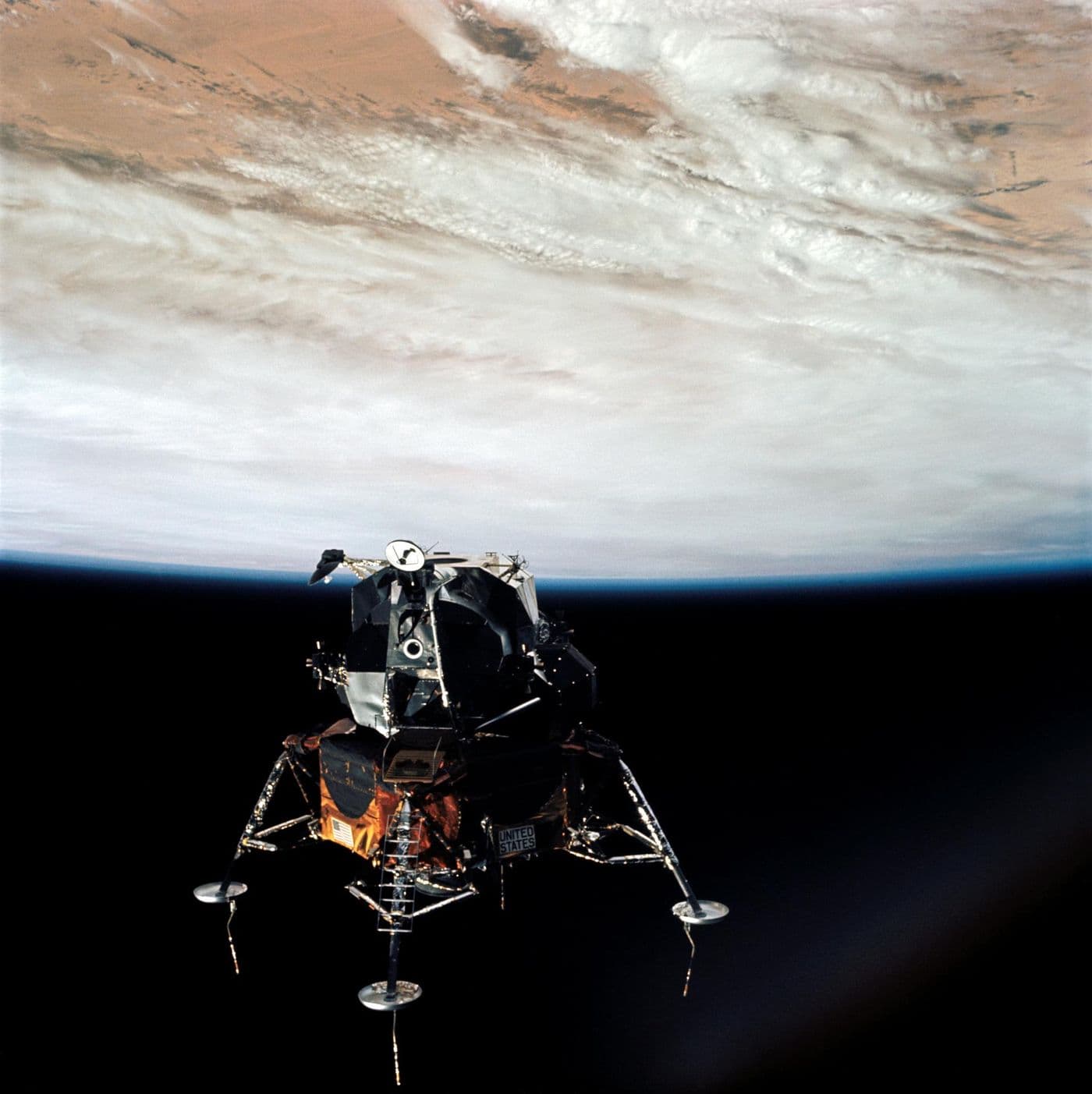 ◉ REÁLNÉ FOTO · NASA / images.nasa.gov
Contents
living encyclopedia entrypollo 9 was a lunar-module dress rehearsal that could not be skipped: for the first time a crewed craft flew that could not re-enter Earth’s atmosphere. The crew had to undock it in orbit, fly away and dock again with the command module.
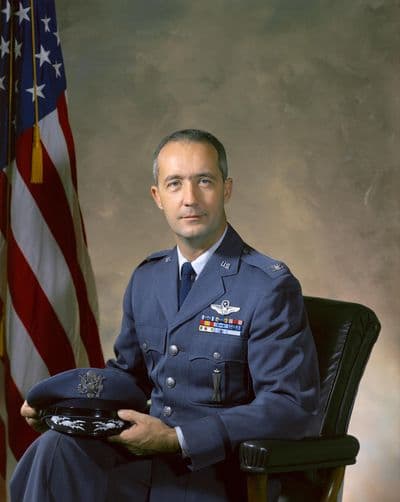
A veteran of Gemini 4 (1965), which he commanded as pilot on the first multi-day American mission to include a spacewalk. After Apollo 9 he might have been offered command of a Moon-landing mission, but instead left the astronaut corps to become manager of the entire Apollo program.
open person →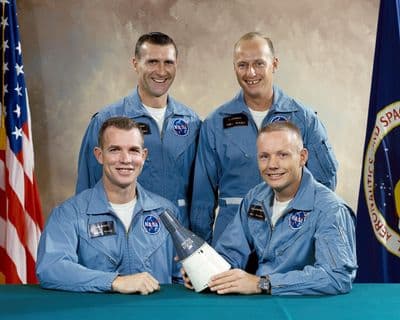
A veteran of Gemini 8 (1966) alongside Neil Armstrong — the first docking of two spacecraft in orbit, dramatically cut short by a thruster malfunction. After Apollo 9 he commanded the Apollo 15 landing mission in 1971.
open person →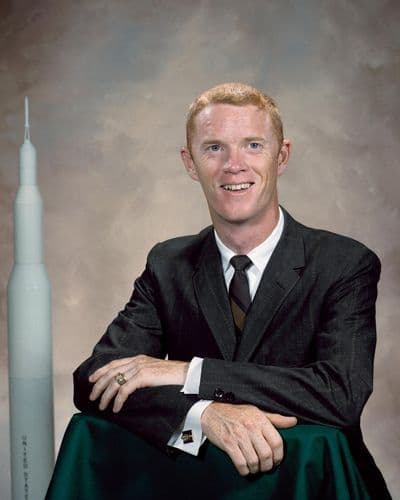
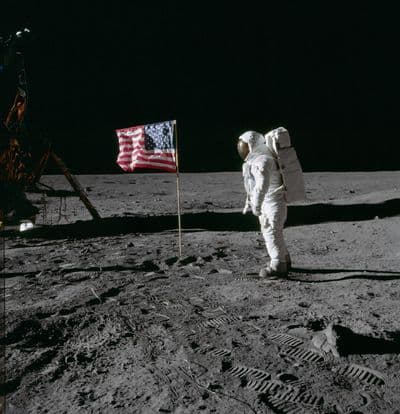
A civilian test pilot with no prior spaceflight experience — Apollo 9 was his only spaceflight. Space sickness cut short his planned spacewalk, but he still became the first in the Apollo program to test the PLSS life-support backpack in open space.
open person →Russell Schweickart performed a spacewalk to test the lunar surface suit — the only one with its own life support independent of the spacecraft. The lunar module “Spider” and command module “Gumdrop” separated and, after six hours of flight, docked again.
Apollo 9 was the first crewed flight of the complete Apollo spacecraft — the command and service module TOGETHER with the lunar…
číst kapitolu →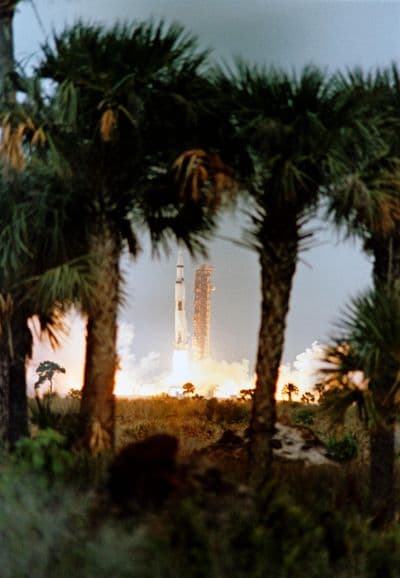
On the fourth day of the flight, Schweickart was to make his way along the spacecraft’s exterior from the lunar module to the…
číst kapitolu →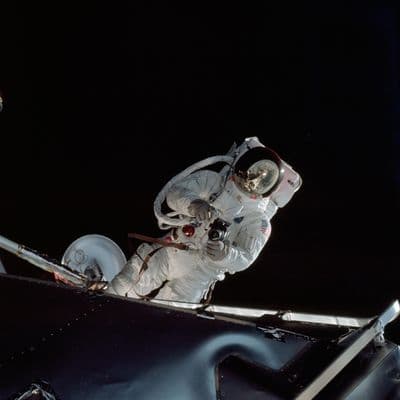
The remaining days of the flight served as a ten-day trial of the Gumdrop module under conditions matching the length of a lunar…
číst kapitolu →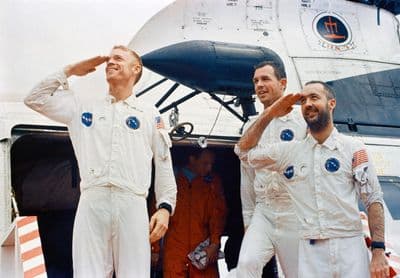
MISSION IN NUMBERS
- Apollo 9 was the first crewed mission with the complete Apollo stack — command, service AND lunar module together.
- The crew invented the call signs “Gumdrop” and “Spider” themselves; NASA initially rejected them as too informal.
- For the first time in history, humans flew in a craft (the lunar module Spider) that could not by itself return them to Earth.
- Schweickart’s space sickness cut short the planned spacewalk — he still became the first in the Apollo program to test the PLSS backpack outside the spacecraft.
- Apollo 9 was the last spacecraft to splash down in the Atlantic for fifty years — the next crewed splashdown there was Crew Dragon Demo-1 in 2019.
- Buzz Aldrin watched Gumdrop and Spider redock from Mission Control and later said he knew right then that Apollo 11 would fly to land on the Moon.