Falcon 9
Falcon 9 is a partially reusable launch vehicle built by the American company SpaceX that has transformed spaceflight since 2010. It was the first orbital rocket able to return its first stage to Earth and land it after launch — and then fly that same stage again. This radically lowered the cost of reaching orbit and has made Falcon 9 the most frequently flown rocket of our time; it launches Starlink satellites and the Dragon spacecraft carrying crew and cargo to the International Space Station.
 ◉ REÁLNÉ FOTO · NASA / images.nasa.gov
Contents
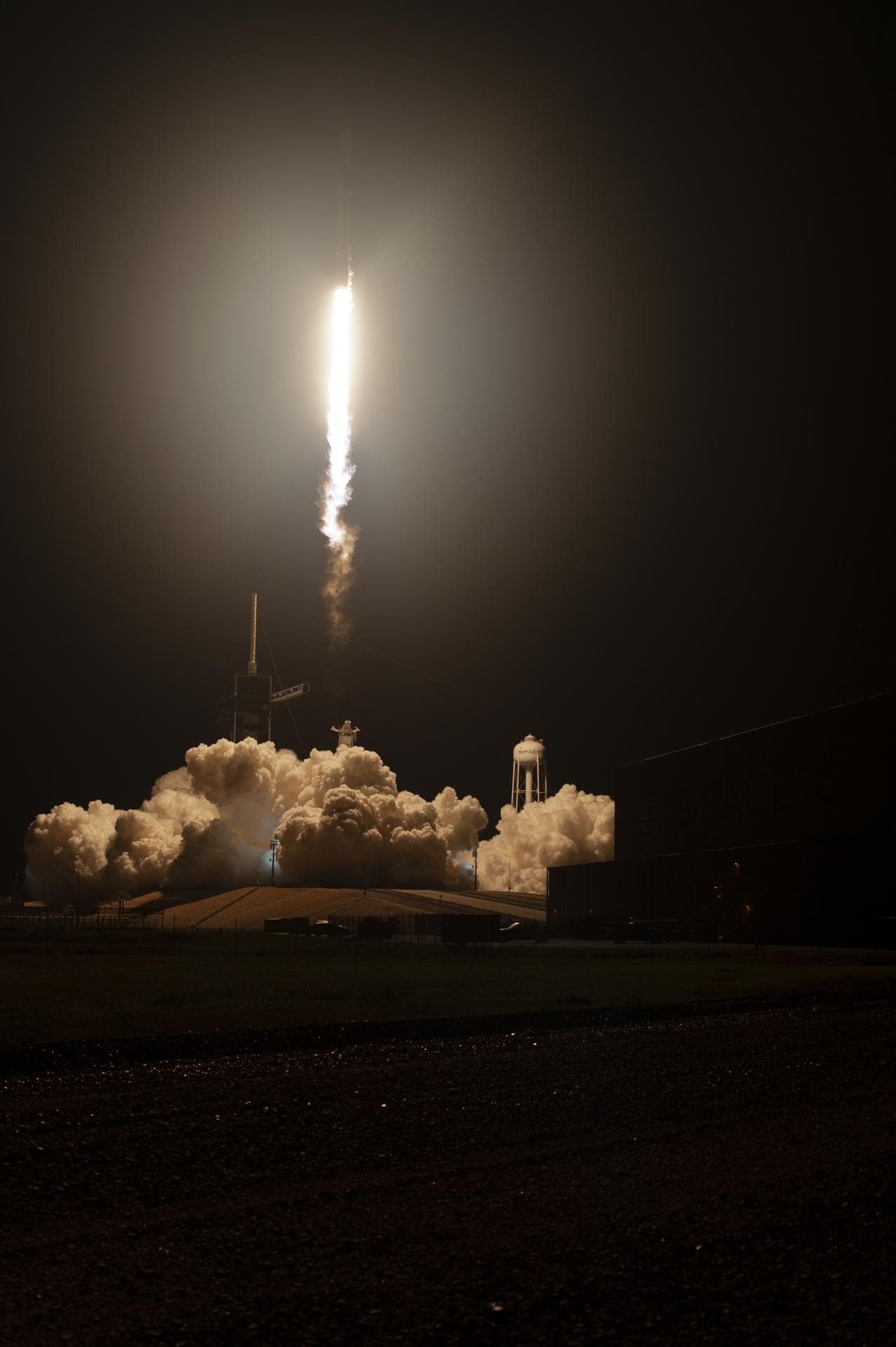
living encyclopedia entryFalcon 9 is a launch vehicle that rewrote the rules of spaceflight. For decades a rocket was a single-use machine — every launch meant expensive hardware sinking into the ocean after a few minutes of flight. SpaceX broke that habit: after separating, the first stage of Falcon 9 flies back to Earth under control and lands upright on its legs, either on a pad on land or on a floating ship in the middle of the ocean. That same stage then launches again and again. It is precisely this reusability that has slashed the cost of reaching orbit and made Falcon 9 the most frequently flown rocket of our time.
Falcon 9 first launched on 4 June 2010 from Cape Canaveral in Florida. It is a two-stage rocket: the first stage is powered by nine Merlin engines burning kerosene and liquid oxygen, and the second stage by a single Merlin engine adapted for operation in vacuum. From the start SpaceX designed it around a goal no one had achieved before — making the first stage reusable. Early landing attempts ended in hard impacts, but on 21 December 2015 it finally worked: a Falcon 9 stage landed upright on a concrete pad in Florida. It was the first-ever landing of an orbital-class rocket stage in history. Less than four months later, on 8 April 2016, a stage landed for the first time on a floating ship in the Atlantic, and on 30 March 2017 SpaceX re-launched a previously flown stage for the first time — the first reuse of an orbital-class stage ever.
FALCON 9 IN NUMBERS
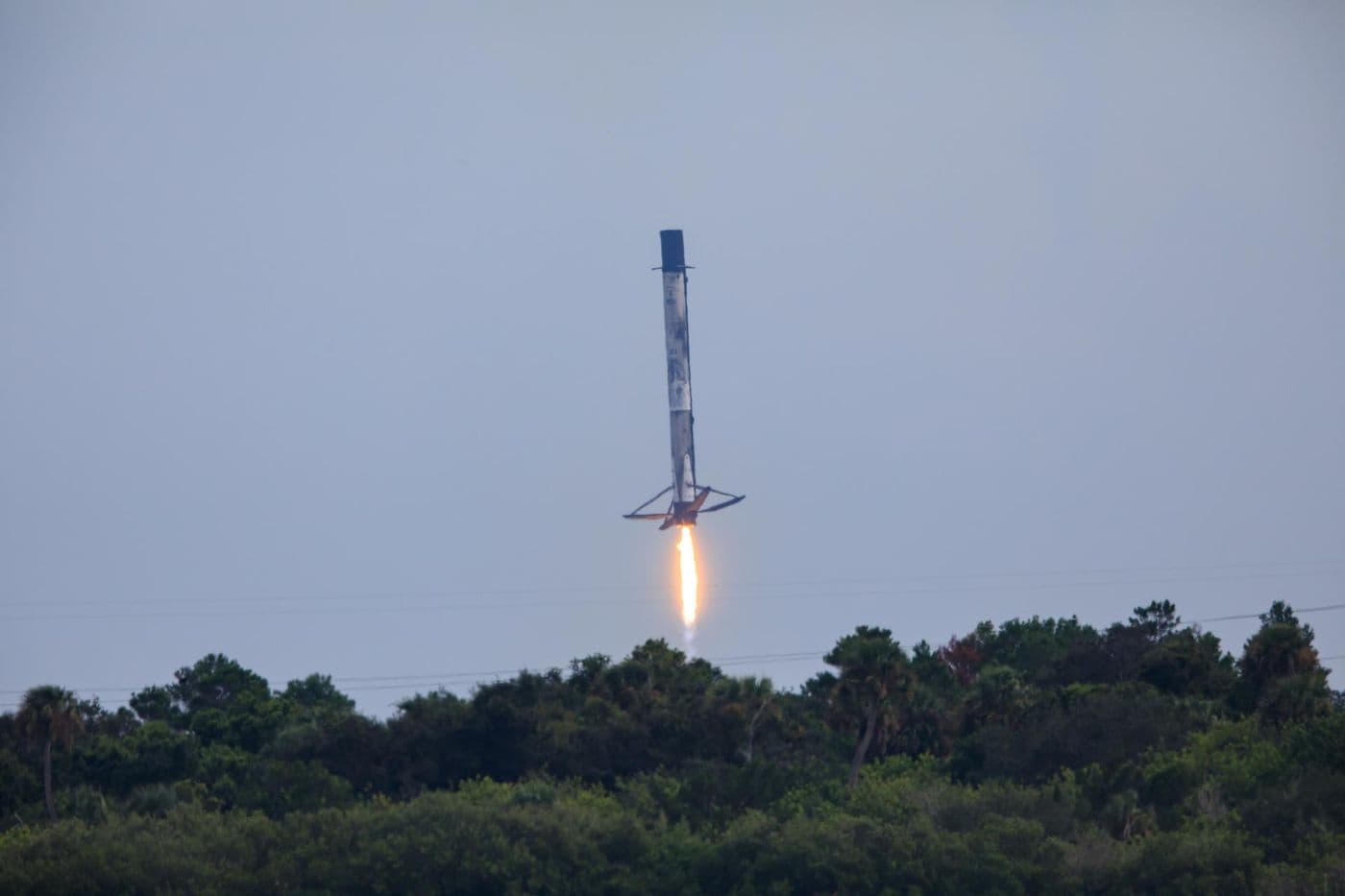
Reusability is at the heart of the whole concept. After delivering its payload, the first stage flips around, slows down with brief engine burns, and — using grid fins and landing legs — touches down either on a pad near the launch site or on an autonomous ship at sea (SpaceX gave them names like "Of Course I Still Love You"). The stage is then inspected, refurbished and flown again — the best boosters have made dozens of flights. Since 2018 the improved Block 5 version has flown, designed specifically for rapid and repeated reuse. By mid-2026 SpaceX had achieved more than 590 successful stage landings, and the record for a single booster stood at 35 flights. Falcon 9 thus turned rocket reuse — long only a theory — into routine.
 ◉ REÁLNÉ FOTO
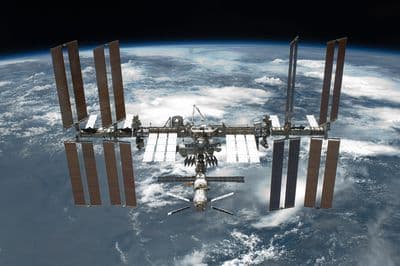
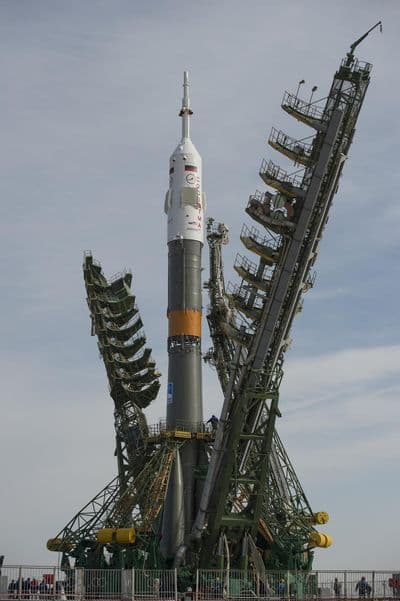
Falcon 9 carries a wide range of payloads: the largest share is SpaceX's own Starlink internet satellites, but the rocket also launches commercial and government satellites and scientific probes. Atop it also flies the Dragon spacecraft — a separate vehicle that Falcon 9 merely lifts into orbit. The cargo version of Dragon resupplies the International Space Station and the Crew Dragon version carries astronauts to it. Crew Dragon's first crewed flight was the Demo-2 mission, which launched on 30 May 2020; for the first time in nine years humans again reached orbit from American soil, and Crew Dragon became — alongside Russia's Soyuz — the second vehicle able to ferry crews to the ISS. Dragon itself is a different vehicle from the Falcon 9 rocket, which serves as its launcher.
- Falcon 9 was the first orbital rocket whose first stage could land after launch and be flown again.
- The first successful stage landing took place on 21 December 2015; by mid-2026 SpaceX had achieved more than 590 of them.
- The first stage is powered by nine Merlin engines — their number gives the rocket its name (Falcon "9").
- By 2026 the most-used booster had made a total of 35 flights.
- Falcon 9 launches the Dragon spacecraft, which resupplies the International Space Station and ferries crews to it.
- The Crew Dragon Demo-2 mission (30 May 2020) returned to the USA the ability to launch humans into orbit from its own soil after nine years.