Soyuz
Soyuz is a family of Soviet and Russian launch vehicles and spacecraft that has flown from the 1960s to the present day. The Soyuz rocket descends from the legendary R-7, and the Soyuz spacecraft has carried crews into orbit for over half a century — today to the International Space Station. It ranks among the longest-serving and most reliable space systems in history.
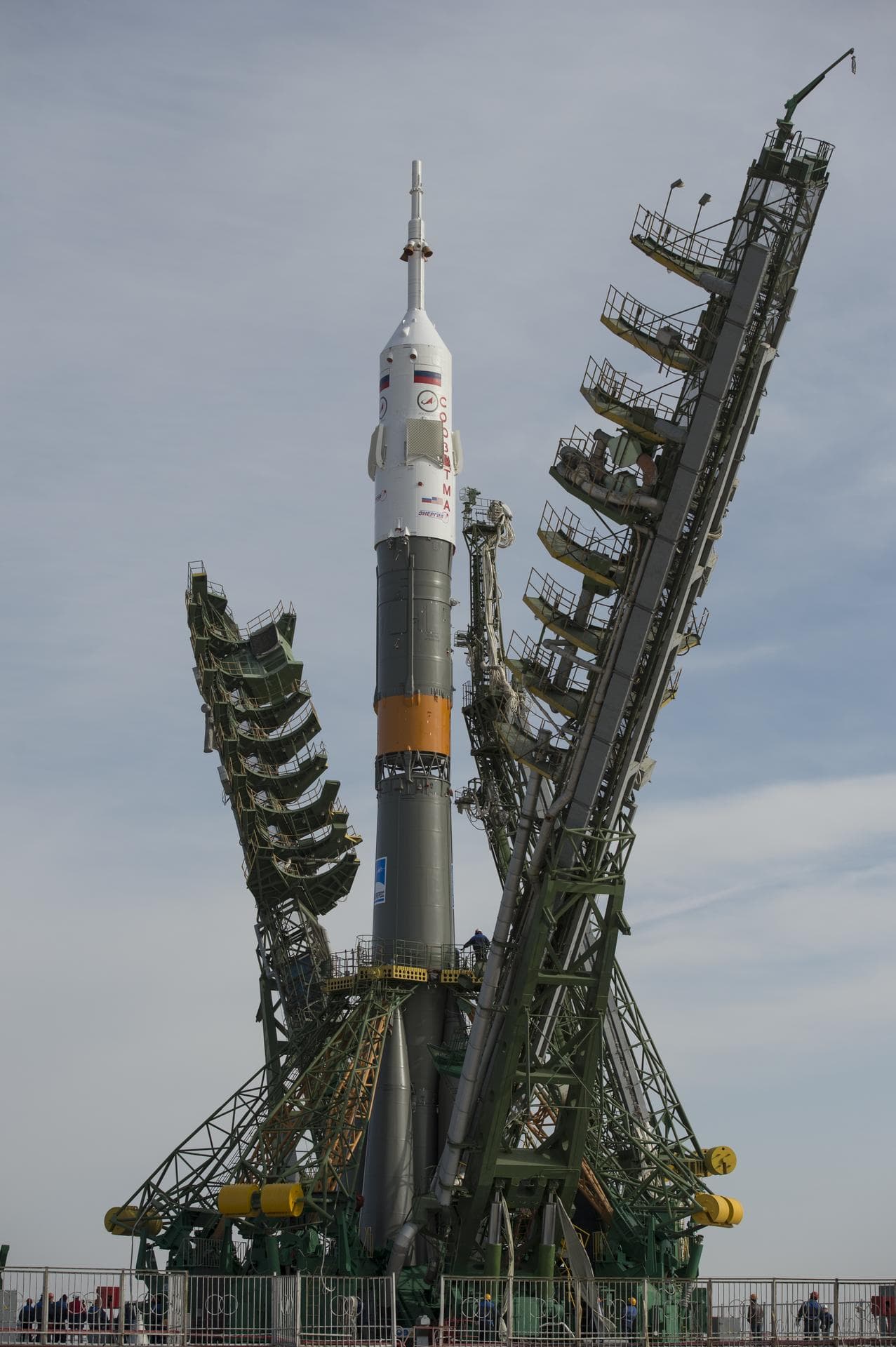 ◉ REÁLNÉ FOTO · NASA / images.nasa.gov
Contents
living encyclopedia entrySoyuz is the longest-serving crewed spacecraft in history — and the rocket that lofts it bears the same name. Since its first flight in the 1960s it has carried Soviet and later Russian crews into orbit, and today it is the main "bus" to the International Space Station. Its beginnings were tragic, its design is famed for its ruggedness, and the rocket family it grew from has flown more launches than any other rocket in the world.
The Soyuz spacecraft was created in Sergei Korolev's design bureau in the mid-1960s, originally as part of the Soviet plan for a flight to the Moon. Its first uncrewed test (Kosmos 133) took place in November 1966. But the first crewed flight, Soyuz 1 in April 1967, ended in disaster: cosmonaut Vladimir Komarov died when the descent module's parachute system failed on return — the first fatality during a spaceflight. After a redesign the program returned to flight and Soyuz became a reliable mainstay of Soviet spaceflight. A second tragedy came in 1971, when the crew of Soyuz 11 (Georgy Dobrovolsky, Vladislav Volkov and Viktor Patsayev) died when the cabin depressurised during descent. Ever since, Soyuz crews have worn pressure suits for launch and landing.
SOYUZ IN NUMBERS
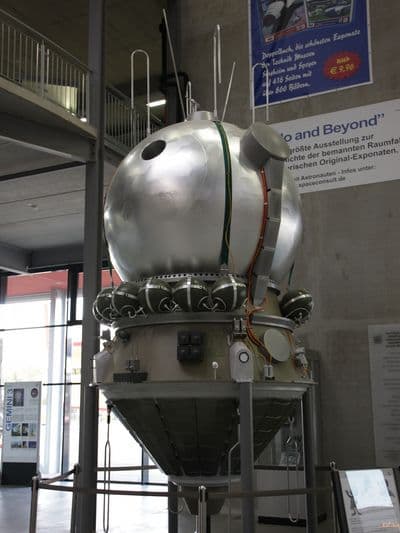
The Soyuz spacecraft consists of three parts: a spherical orbital module at the front (living and working space with the docking mechanism), a bell-shaped descent module in the middle (the only part that returns to Earth) and a cylindrical instrument-service module at the rear (engine, propellant, power). It carries up to three crew, measures about seven metres and weighs roughly seven tonnes. Unlike American craft, Soyuz lands on solid ground — the descent module comes down on parachutes and fires retrorockets just above the surface. The ship has been modernised many times over the decades (Soyuz, Soyuz T, TM, TMA and today's Soyuz MS), yet the basic three-part layout has stayed the same.
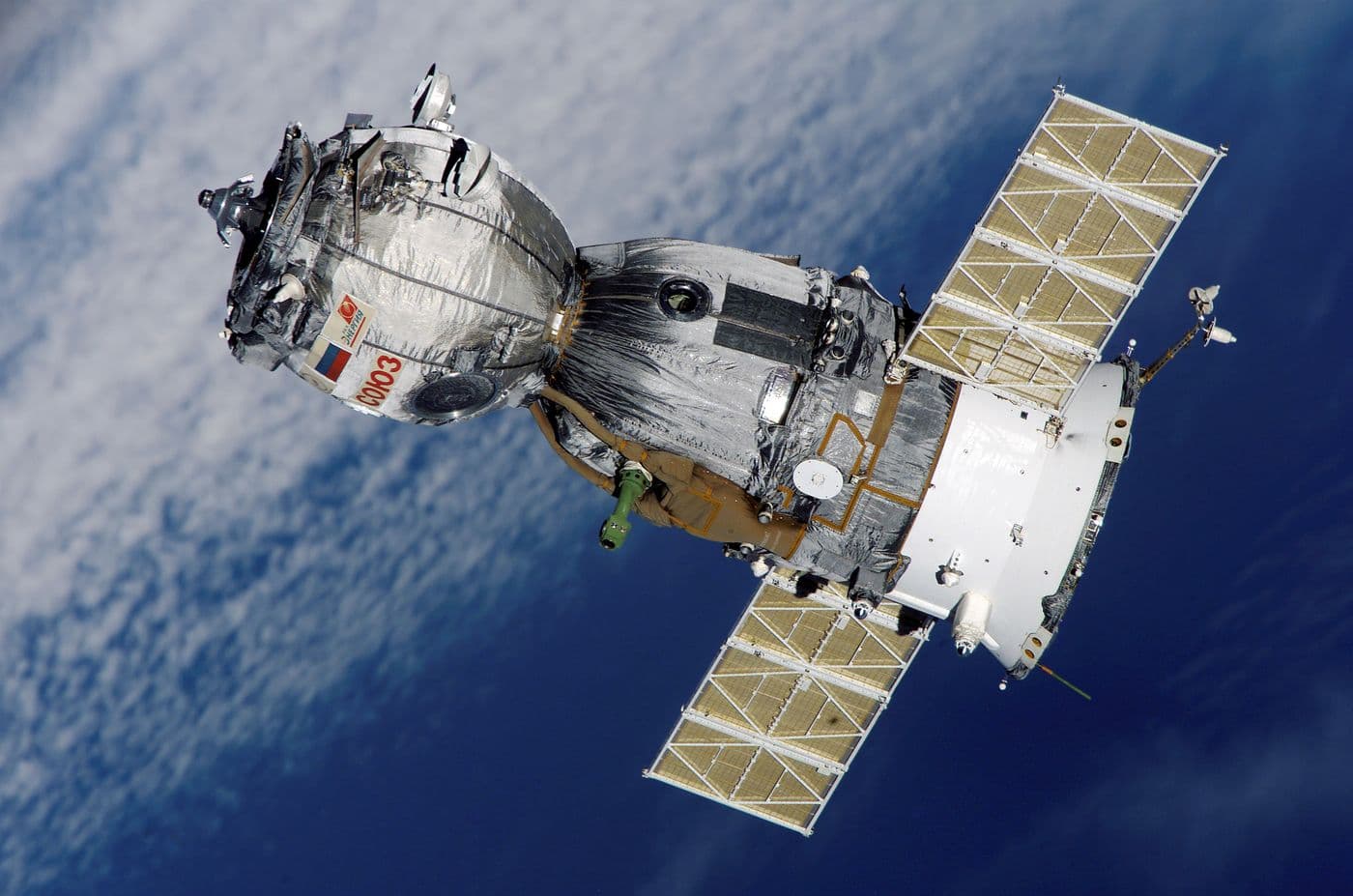 ◉ REÁLNÉ FOTO
SPACECRAFT MODULES
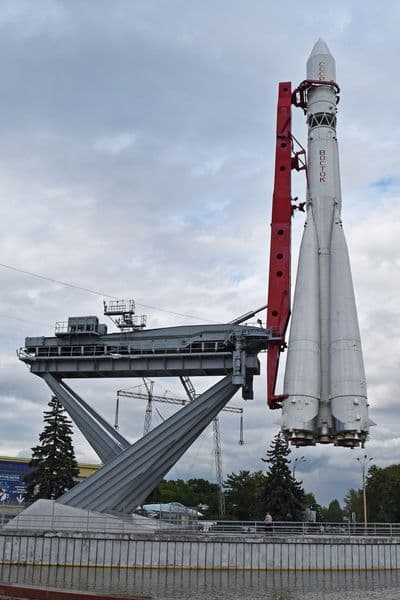
rozklikni jednotlivé díly a systémy →The Soyuz rocket is a direct descendant of the R-7 — the world's first intercontinental ballistic missile, the same design lineage that launched Sputnik in 1957 and Gagarin four years later. Its hallmark is the cluster of four conical strap-on boosters around a central core, which gives the rocket the shape of a blooming flower at liftoff. Over the decades it has gone through many versions (Soyuz, Soyuz-U, Soyuz-FG and today's digitally controlled Soyuz-2); it stands about 46 metres tall, weighs over 300 tonnes at launch and lifts seven to eight tonnes to low Earth orbit. The R-7 family has flown over 1,900 launches — more than any other rocket in history — and ranks among the most reliable launch vehicles ever built.
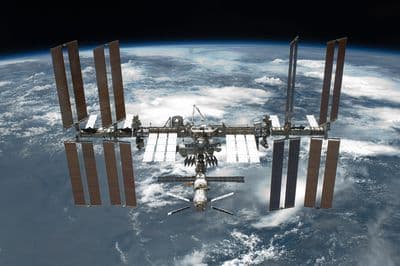
Soyuz remains in active service more than half a century after its first flight. Today's Soyuz MS version regularly carries cosmonauts and astronauts to the International Space Station, where it also serves as a lifeboat ready for an immediate return. After the American Space Shuttle retired in 2011, Soyuz was the only way for humans to reach the ISS for nine years — until 2020, when the American Crew Dragon joined it. It is precisely this uninterrupted, reliable service that makes Soyuz one of the most successful space programs in history.
- Soyuz is the longest-serving crewed spacecraft in history — flying from the 1960s to the present day.
- The Soyuz rocket descends from the R-7, the same family that launched Sputnik and Gagarin; the family has over 1,900 launches.
- The Soyuz spacecraft has three parts: the orbital module, the descent module and the instrument-service module.
- Unlike American capsules, Soyuz lands on solid ground — firing retrorockets just above the surface.
- After the American Space Shuttle retired (2011), Soyuz was the only way for humans to reach the ISS for nine years.
- The first crewed flight (Soyuz 1, 1967) ended in the death of Vladimir Komarov — the first fatality during a spaceflight.