Gemini 8
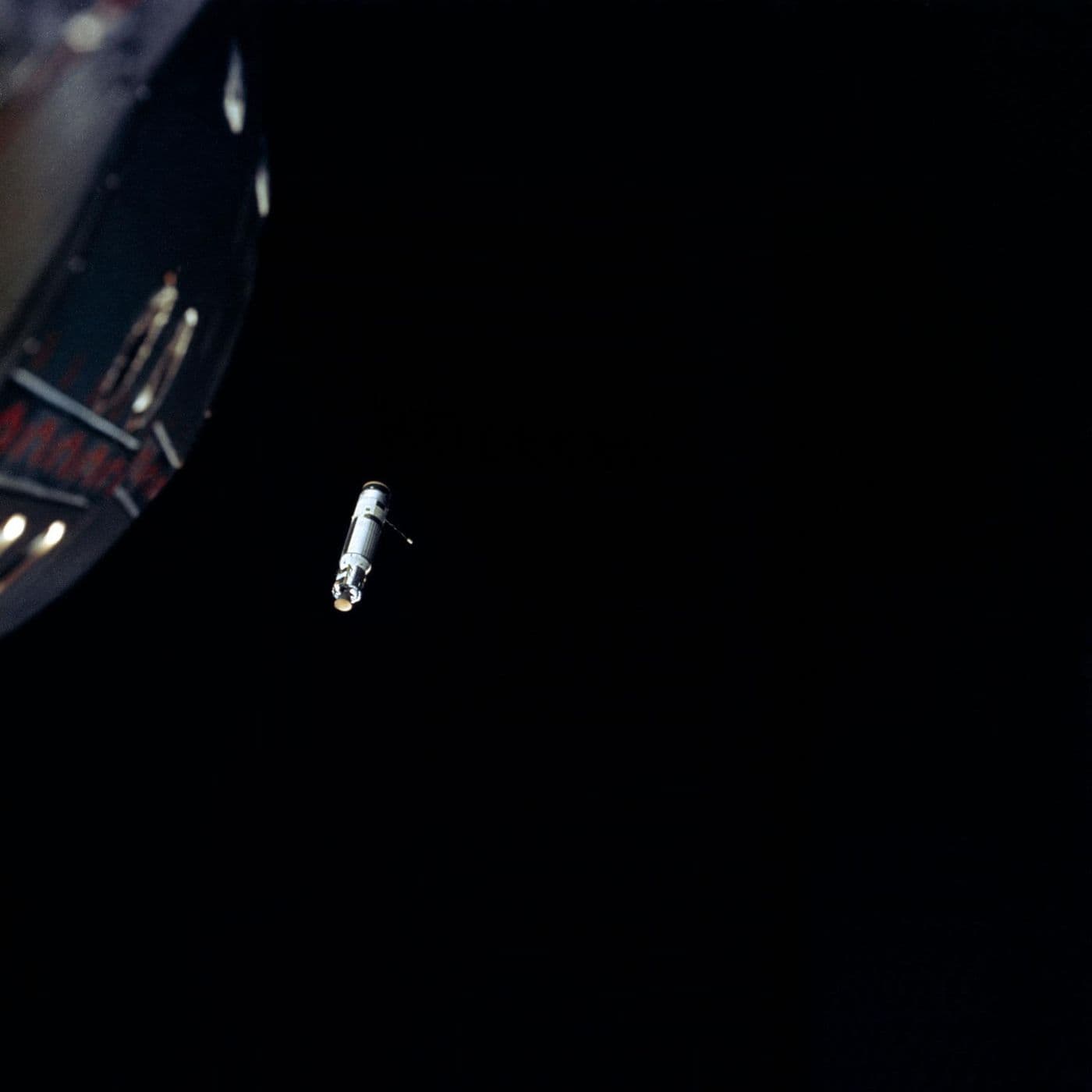
Gemini 8, in March 1966, achieved the first docking of two spacecraft in orbit. Moments later the craft carrying Neil Armstrong and David Scott began spinning out of control — the commander’s cool-headed emergency response saved the mission.
 ◉ REÁLNÉ FOTO · NASA / images.nasa.gov
Contents
living encyclopedia entryemini 8 was meant to demonstrate a skill essential to the Moon: docking two spacecraft in orbit. Armstrong and Scott successfully docked with the uncrewed Agena target — but the elation lasted only minutes.
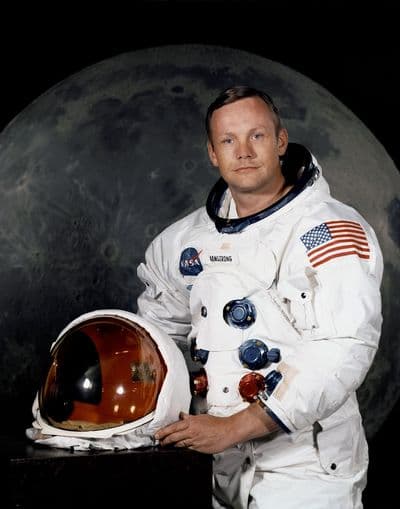
A NASA pilot and former naval aviator, Gemini 8 was his first spaceflight. His cool-headed handling of the emergency spin helped cement his reputation — three years later he commanded Apollo 11 and became the first person on the Moon.
open person →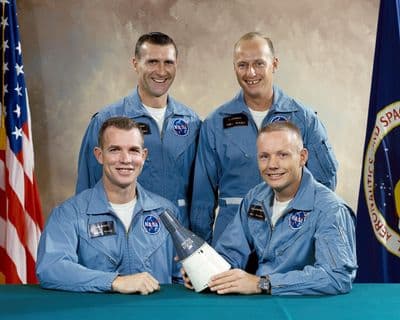
A U.S. Air Force pilot, Gemini 8 was his first spaceflight. He later flew on Apollo 9 and, as commander of Apollo 15, became the seventh person to walk on the Moon.
open person →A stuck thruster set the docked stack spinning, and when Armstrong tried to stop it by undocking from the Agena, it spun even faster — over one revolution per second, close to the point where the crew would black out. Armstrong saved the situation by shutting down the orbital control system and using the reentry backup system, which forced an immediate end to the mission and an emergency splashdown in the Pacific after barely eleven hours.
Gemini 8 launched on March 16, 1966, at 16:41:02 UTC from Launch Complex 19 atop a Titan II GLV. The crew was Command Pilot Neil…
číst kapitolu →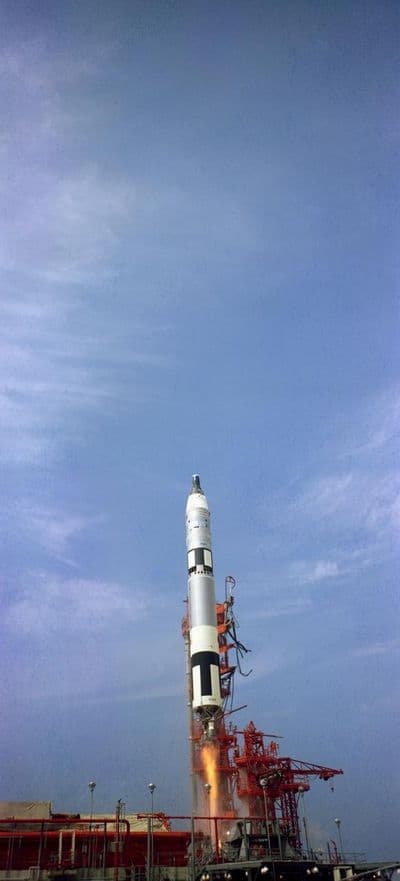
Armstrong tried to stop the roll using the OAMS thrusters, but it immediately resumed. With OAMS fuel dropping toward 30%, the…
číst kapitolu →Because of the rule requiring an immediate end to the mission after RCS use, the crew had to land more than a day earlier than…
číst kapitolu →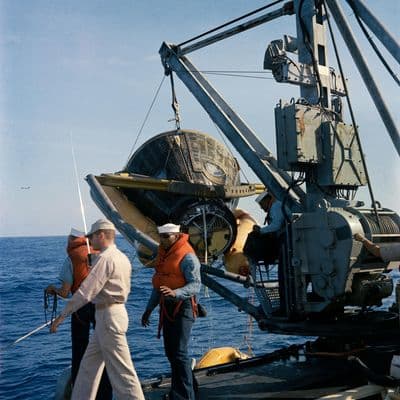
MISSION IN NUMBERS
- Gemini 8 performed the first-ever docking of two spacecraft in orbit in the history of spaceflight.
- A stuck thruster caused the spacecraft to spin at 296 degrees per second — more than one full rotation per second.
- Armstrong stopped the spin using the RCS thrusters, which were originally intended only for atmospheric reentry.
- Under NASA rules, using the RCS outside of reentry automatically meant the mission had to end immediately.
- The mission lasted just under 11 hours instead of the planned three days, landing more than a day early.
- Handling the emergency helped Neil Armstrong earn the reputation that led to him commanding Apollo 11 three years later.