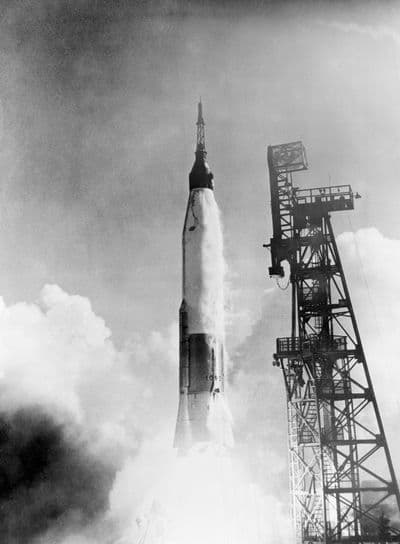
Gemini 4
Gemini 4, in June 1965, brought the first American spacewalk — Ed White spent 23 minutes outside the spacecraft. The four-day flight with James McDivitt was also the longest American flight to date.
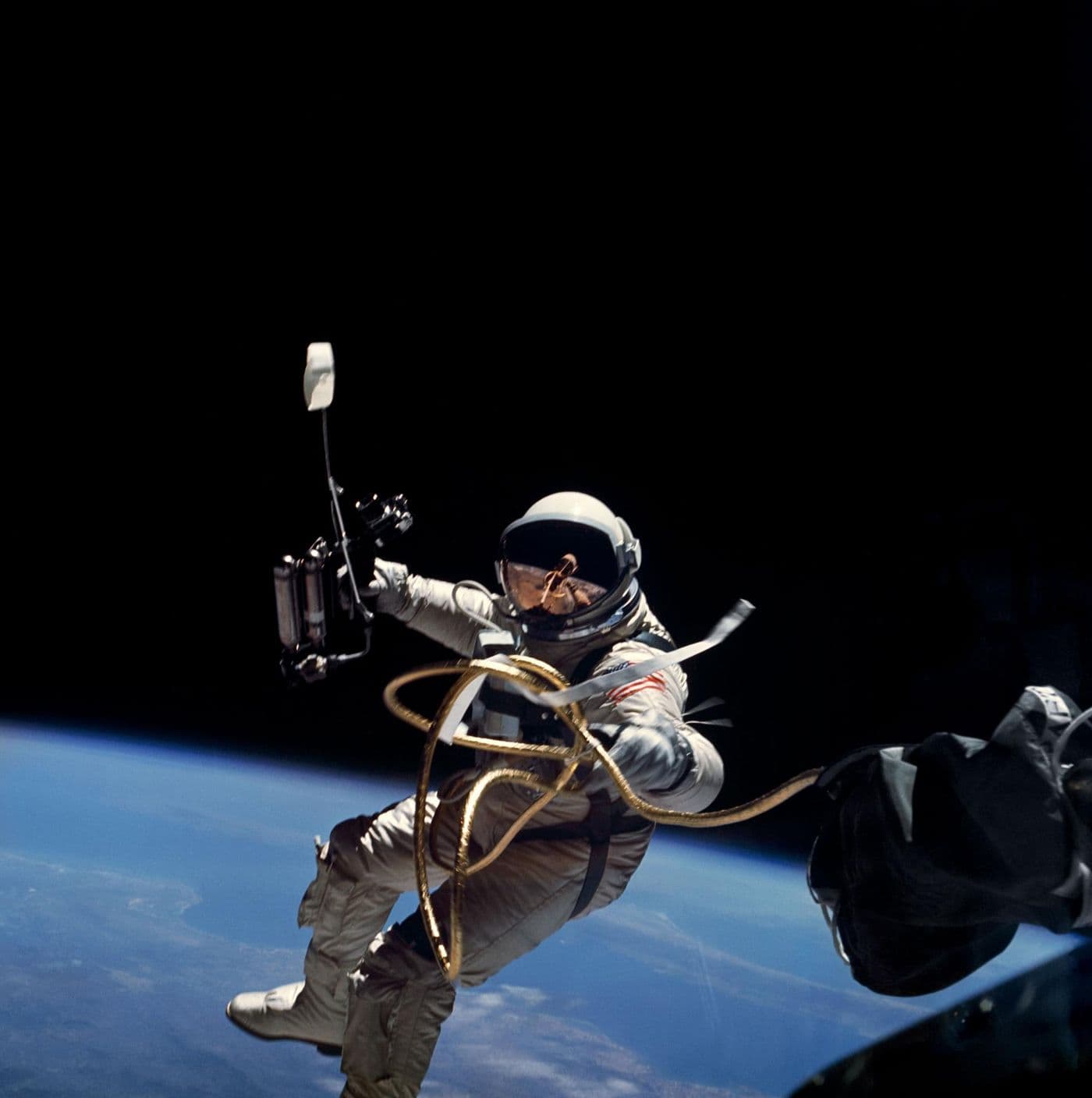 ◉ REÁLNÉ FOTO · NASA / images.nasa.gov
Contents
living encyclopedia entryemini 4 mělo dohnat sovětský náskok ve výstupech do volného prostoru, který o tři měsíce dřív předvedl Alexej Leonov. Ed White se stal prvním Američanem mimo loď — na třímetrové šňůře, s ručním manévrovacím dělem v ruce.
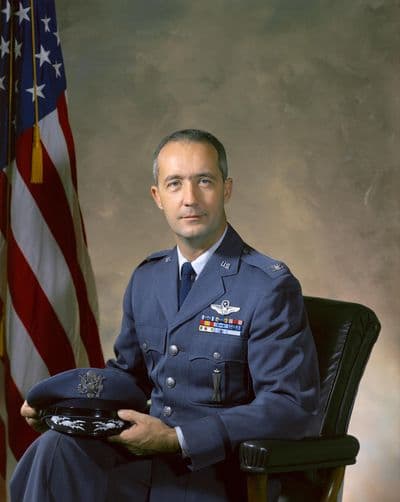
A U.S. Air Force pilot, Gemini 4 was his first spaceflight. He later commanded (as backup) Gemini 9A and Apollo 9, where he first tested the lunar module in Earth orbit.
open person →
A U.S. Air Force pilot, the first American to walk in space. Gemini 4 was his only flight — he died in 1967 in the Apollo 1 launch-pad fire.
open person →White si let mimo loď užíval natolik, že prodloužil plánovaný čas — velitel McDivitt ho musel k návratu opakovaně vyzývat. Návrat do kabiny navíc zkomplikovala vzpříčená západka poklopu, kterou posádka vyřešila jen s vypětím sil. White po přistání řekl, že to byl nejsmutnější okamžik jeho života.
Gemini 4 launched on June 3, 1965, at 15:15:59 UTC from Launch Complex 19 atop a Titan II GLV. The crew was Command Pilot James…
číst kapitolu →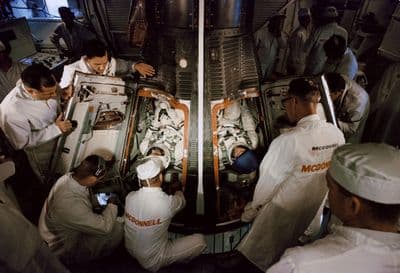
Ed White became the first American to leave his spacecraft in space. Tethered on a 4.6-metre (15 ft) line, he maneuvered using a…
číst kapitolu →Gemini 4 spent 4 days, 1 hour, 56 minutes and 12 seconds in orbit — the longest American flight to date, an important step toward…
číst kapitolu →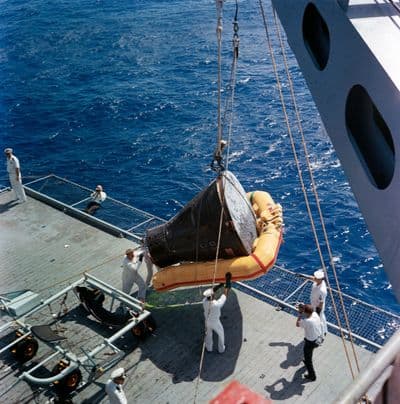
MISSION IN NUMBERS
- Ed White became the first American to walk in open space — the spacewalk lasted about 23 minutes.
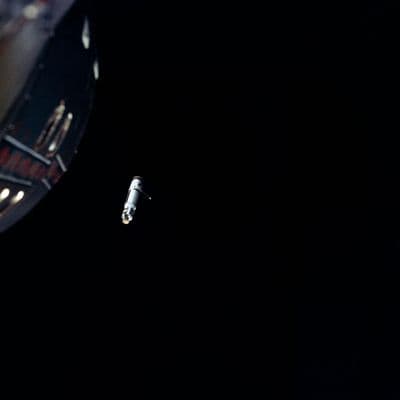
- The attempt to approach the discarded Titan stage failed due to a lack of understanding of orbital mechanics — thrusting toward the target actually moved the orbit farther away.
- White was reluctant to return to the cabin and, on the order "Get back in!", replied: "It's the saddest moment of my life."
- Reclosing the hatch after the spacewalk took about twenty minutes and was a potentially fatal situation.
- A guidance-computer failure on the 48th revolution forced the crew to switch to a manual, Mercury-style reentry.
- The four-day mission duration was an American record in 1965 and an important step toward multi-day Apollo flights.