Apollo–Soyuz
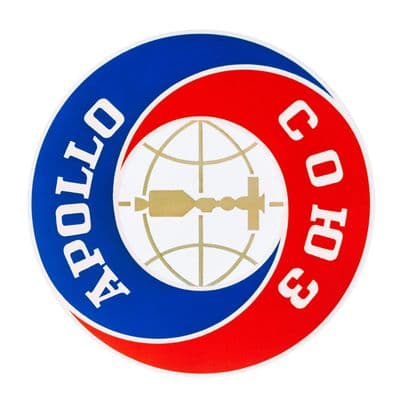
Apollo–Soyuz (ASTP) was the first joint Soviet–American crewed flight, on 15–24 July 1975. The American Apollo docked with the Soviet Soyuz 19 and Tom Stafford shook hands with Alexei Leonov — the first international docking and a symbolic end to the space race.
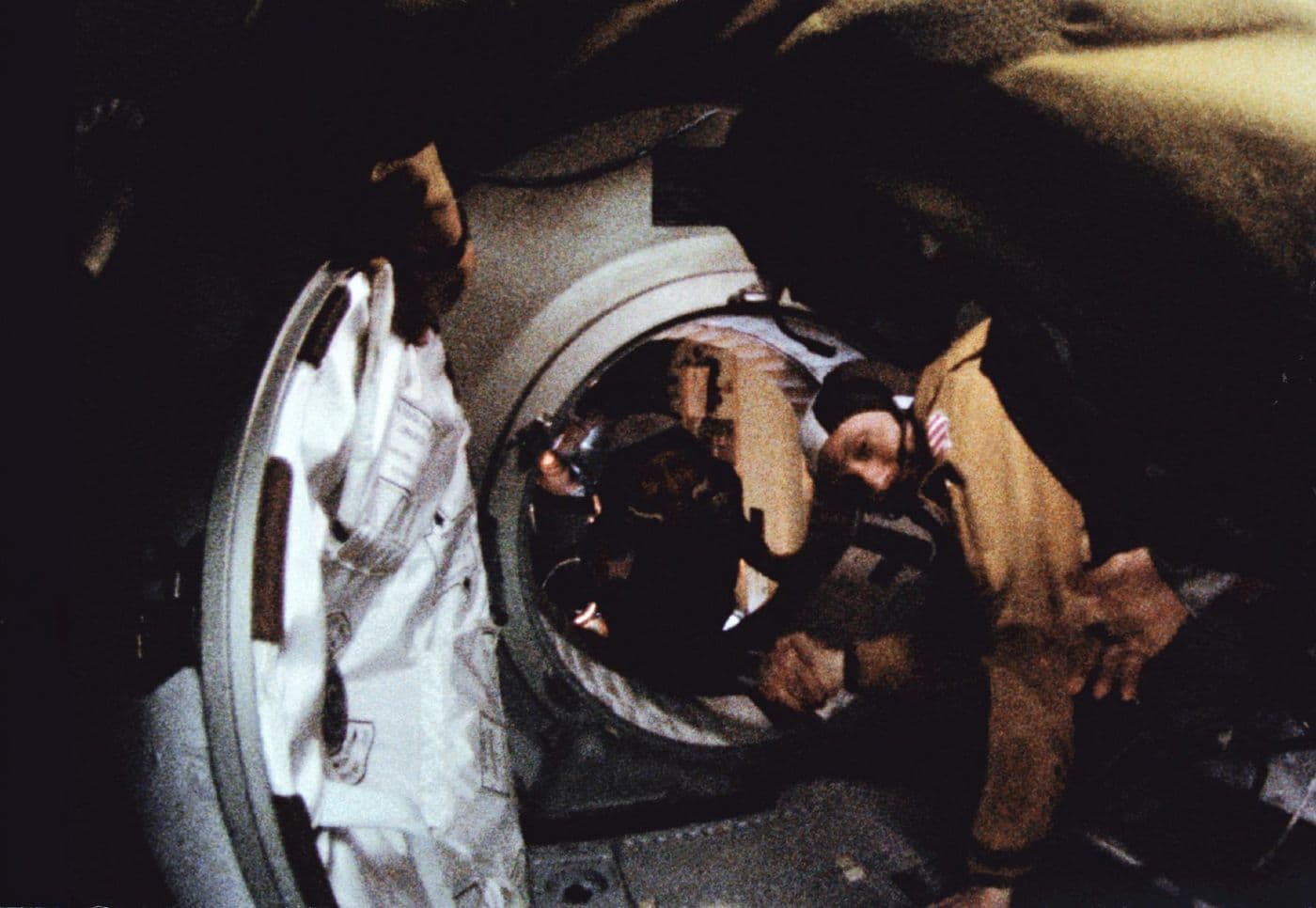 ◉ REÁLNÉ FOTO · NASA / images.nasa.gov
Contents
living encyclopedia entryApollo–Soyuz closed the space race with a gesture of reconciliation: in July 1975, for the first time in history, the spacecraft of two rival superpowers joined together and their crews shook hands 220 kilometres above the Earth. Officially the Apollo–Soyuz Test Project (ASTP), it was the last flight of an Apollo spacecraft and, for six long years, the last American crewed flight too.
The idea of a joint flight matured during the détente between the USA and the USSR in the early 1970s. The agreement was signed in 1972 by President Nixon and Premier Kosygin. Technically it was a major challenge: the two craft used different atmospheres and incompatible docking systems. That is why a special docking module was built, with the androgynous APAS-75 mechanism that also served as a transfer airlock. For three years the crews trained together and learned each other's language.
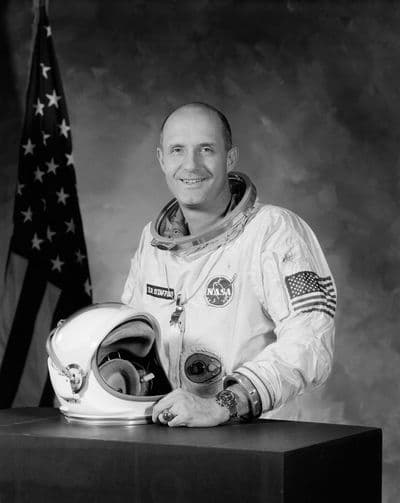
Commander of the American Apollo. A veteran of Gemini and commander of Apollo 10; he was first to shake hands with Leonov at the meeting in space.
open person →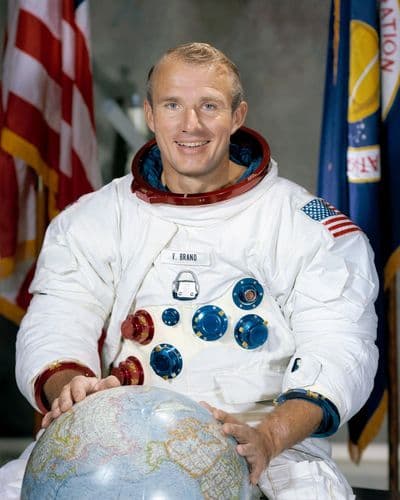
Pilot of the Apollo command module. Apollo–Soyuz was his first spaceflight.
open person →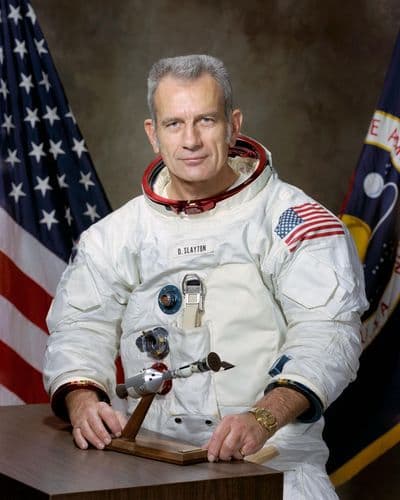
One of the "Mercury Seven"; after years grounded he finally reached space here, at 51, as docking module pilot.
open person →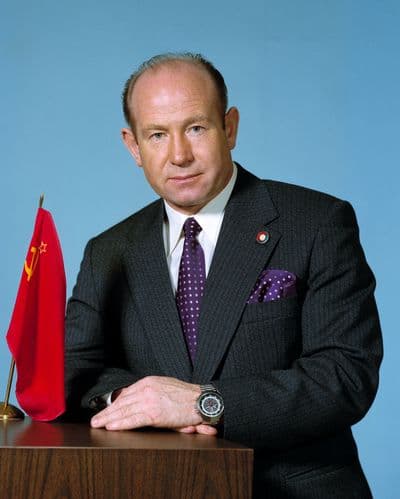
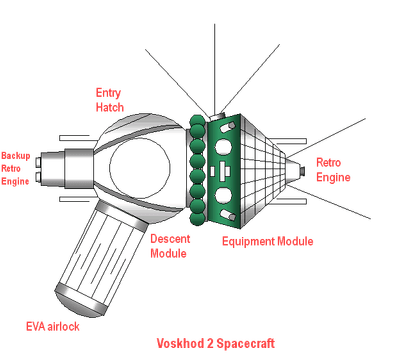
Commander of the Soviet Soyuz 19. He achieved the first spacewalk back in 1965 aboard Voskhod 2.
open person →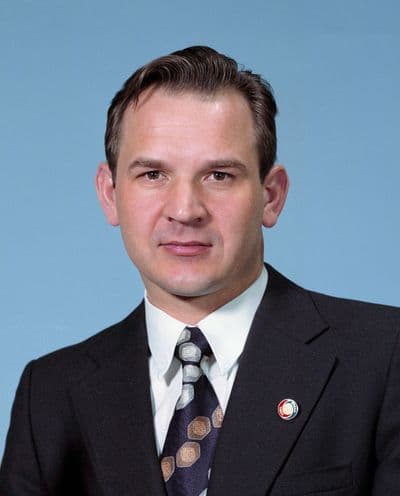
Flight engineer of Soyuz 19. An aerospace engineer who had already tested welding in space in 1969.
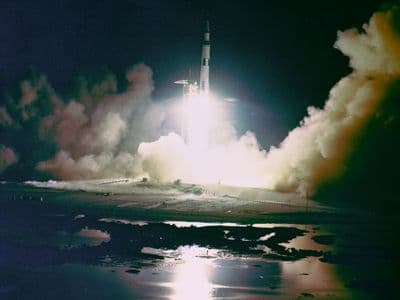
open person →The mission began on 15 July 1975 with two launches on two continents. At 12:20 UTC the Soviet Soyuz 19 lifted off from Baikonur…
číst kapitolu →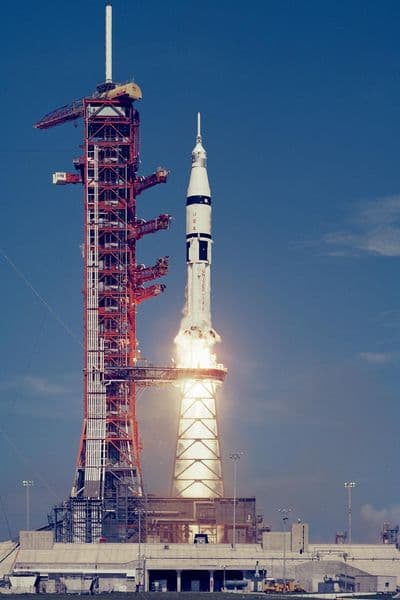
After two days of closing in, on 17 July 1975 at 16:10 UTC the two spacecraft joined together internationally for the first time…
číst kapitolu →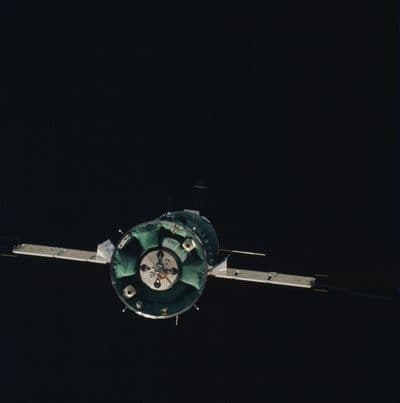
About three hours after docking, at 19:19 UTC, Tom Stafford and Alexei Leonov shook hands in the open hatch between the ships —…
číst kapitolu →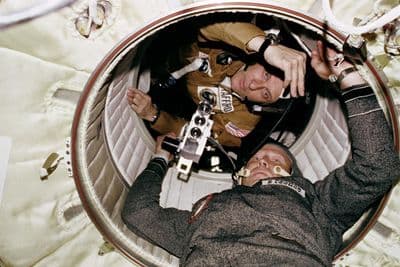
The ships undocked on 19 July. Soyuz 19, with Leonov and Kubasov, landed on 21 July on the Kazakh steppe. Apollo stayed in orbit…
číst kapitolu →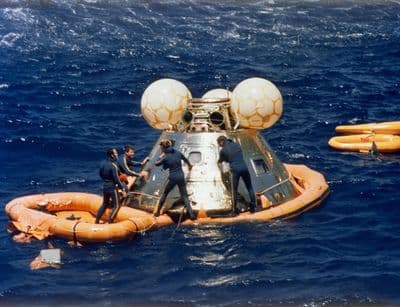
MISSION IN NUMBERS
OČITÉ SVĚDECTVÍ„Soyuz and Apollo are shaking hands.
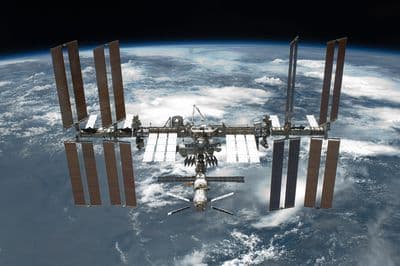
Apollo–Soyuz became a symbol that cooperation in space is possible despite deep political divides. The androgynous docking system the mission proved became the ancestor of the mechanisms of later stations. Direct cooperation fell quiet for two decades, but the spirit of the mission was revived in the 1990s by the Shuttle–Mir program and finally by the International Space Station (ISS), operated today jointly by the former rivals.
- It was the first international crewed docking of all — a symbolic end to the space race.
- The docking module served as an airlock: Apollo used pure oxygen at low pressure, Soyuz a nitrogen–oxygen atmosphere at higher pressure.
- Deke Slayton, one of the "Mercury Seven", first flew only at the age of 51 — the oldest person in space at that time.
- It was the last flight of an Apollo spacecraft and of the Saturn IB; the next American crewed flight came only six years later (STS-1, 1981).
- On return, toxic nitrogen tetroxide entered the Apollo cabin; Vance Brand briefly passed out, but the crew fully recovered.
- Leonov jokingly called Stafford's drawling Russian "Oklahomski".
GALERIE
3 snímků · klikni pro zoomRELATED ARTICLES
6 provázaných hesel · klikni pro detail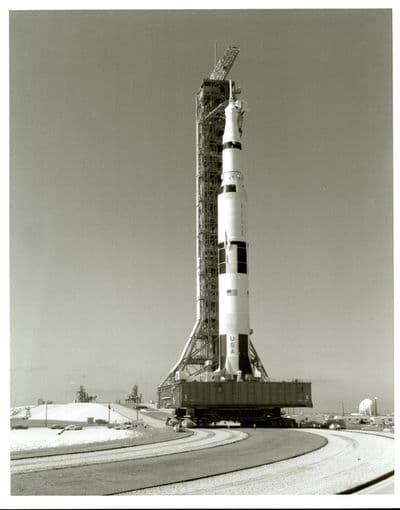 ◉ REÁLNÉ FOTO
 ◉ REÁLNÉ FOTO
 ◉ REÁLNÉ FOTO
 ◉ REÁLNÉ FOTO
 ◉ REÁLNÉ FOTO
 ◉ REÁLNÉ FOTO