Freedom 7
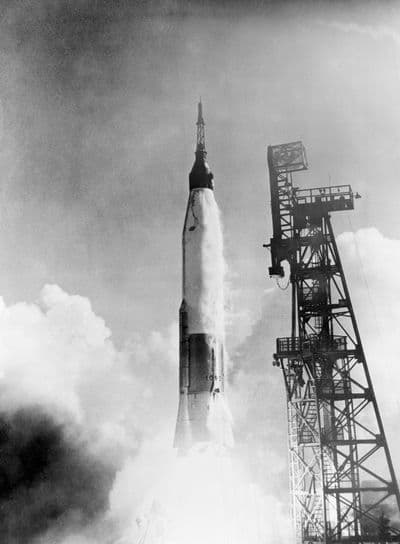
Freedom 7 sent Alan Shepard on a 15-minute suborbital flight on 5 May 1961 — the first American in space, three weeks after Gagarin. The Mercury capsule reached 187 km and splashed down in the Atlantic.
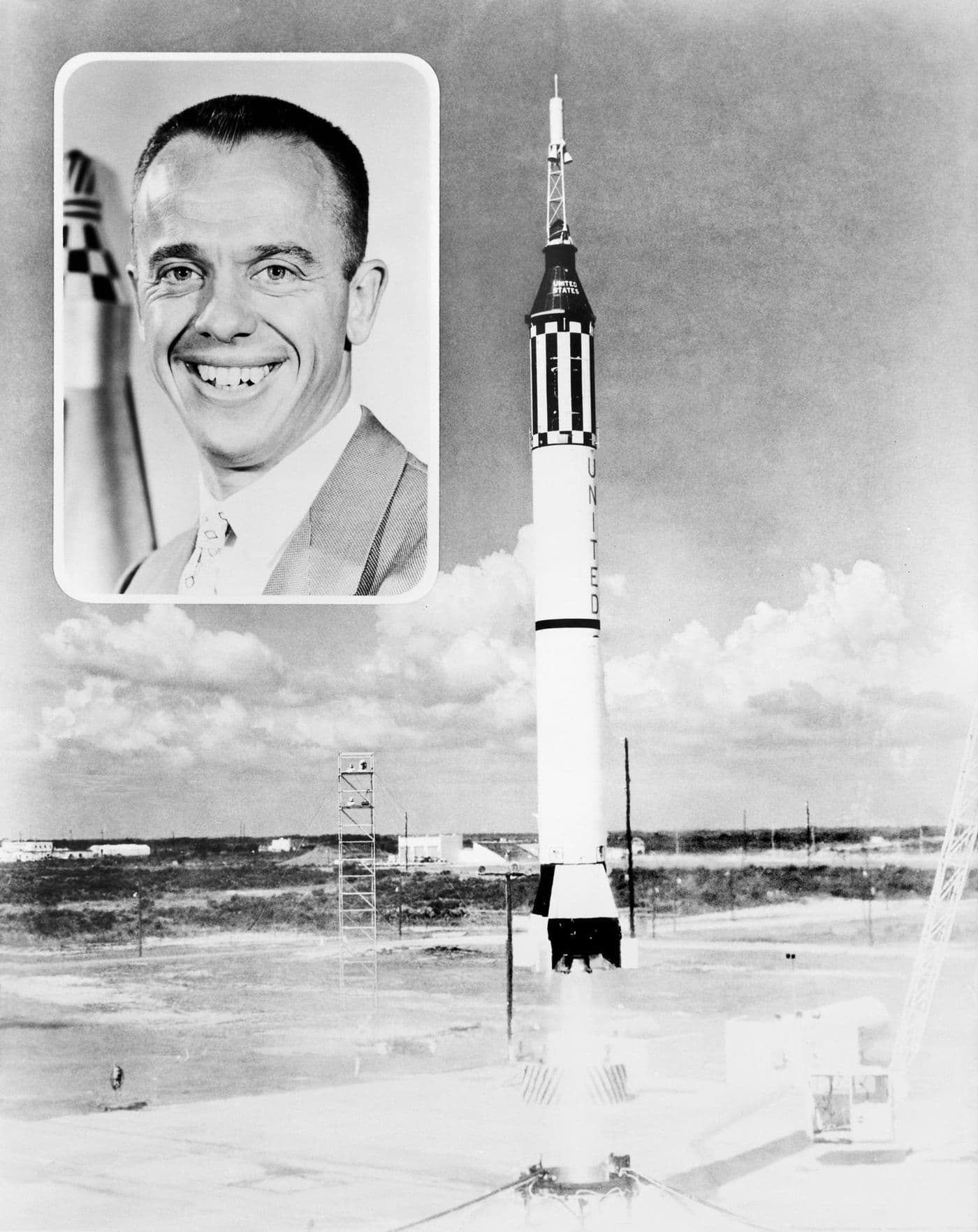 ◉ REÁLNÉ FOTO · NASA / images.nasa.gov
Contents
living encyclopedia entryreedom 7 was the first crewed flight of the Mercury program and America’s answer to the shock of the Soviet Gagarin flight. Alan Shepard spent under sixteen minutes in space — no Earth orbit, but American pride in the space race was salvaged.
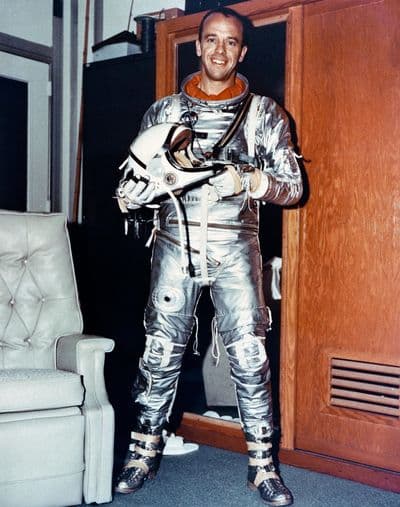
One of the original Mercury Seven, a Navy pilot. Freedom 7 made him the first American in space — the second human in history after Gagarin. Ten years later, on Apollo 14 (1971), at 47 he became the oldest person ever to stand on the Moon.
open person →A Redstone rocket, far weaker than the Soviet R-7, carried the capsule. Shepard flew lying on his back, performed manual attitude maneuvers, and experienced over 11 g on reentry. Television broadcasts across the United States followed the Atlantic splashdown.
Alan Shepard entered the Freedom 7 capsule at 5:15 a.m. — launch was planned for 7:20. Because of weather and technical delays,…
číst kapitolu →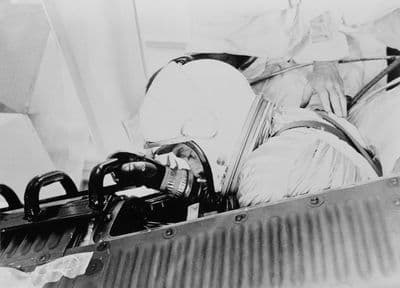
The flight was suborbital — Freedom 7 climbed to 187.5 km and travelled 486 km downrange without ever circling the Earth. Shepard…
číst kapitolu →The capsule came down under parachutes in the Atlantic about 486 km from the launch pad. The impact was comparable to landing a…
číst kapitolu →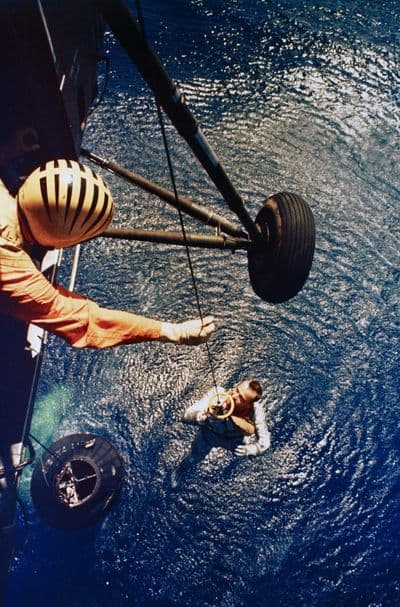
MISSION IN NUMBERS
- Alan Shepard became the first American in space — the second human in history, less than three weeks after Gagarin.
- The flight was suborbital — the capsule never orbited the Earth, only climbed to 187.5 km before falling back down.
- Because of more than three hours of waiting on the pad, Shepard had to urinate directly into his suit — suits gained a collection device after the mission.
- Shepard became the first person in history to manually pilot a spacecraft in all three axes during flight.
- Only eleven minutes passed between splashdown and being aboard the recovery ship — one of the fastest returns of the Mercury program.
- Less than three weeks after Freedom 7, President Kennedy announced the goal of landing a man on the Moon by the end of the decade — the start of the Apollo program.